← #nieuws

Biotech Thursday bruist van de ideeën voor een uitgekiende financieringsmix

, ,

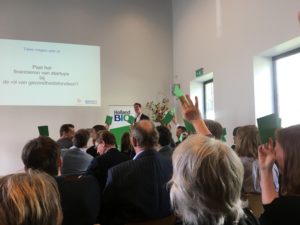
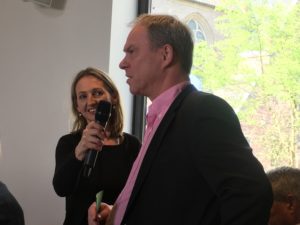
Voor veel ondernemers in de life sciences is het aantrekken van financiering de grootste uitdaging. Een uitgekiende financieringsmix is dan ook niet voor niets één van de doelstellingen van het HollandBIO programma “Een ijzersterk innovatieklimaat”. Toch blijkt de kloof tussen vroege fase financiering en VC-geld voor velen onoverbrugbaar, zo blijkt tijdens de Biotech Thursday van 26 april.  Vier sprekers gaven een introductie, als voer voor de levendige discussie.

Shelley Margetson is als CEO van Gadeta, zoals veel biotech ondernemers, op zoek naar financiering. Maar ze komt beslagen ten ijs: voordat ze startte bij Gadeta, was ze als CFO van Merus betrokken bij verschillende financieringsrondes en de beursgang. Cruciaal voor het succes van Merus was de financieringsmix: van grote farmaceuten met know-how en ervaring tot aan subsidies. Voor Gadeta zijn op dit moment generieke overheidsinstrumenten als de WBSO van groot belang. Een IPO is voor  Gadeta nog niet aan de orde, voorlopig blijft Shelley op zoek naar private financiering.

De KWF Kankerbestrijding investeert jaarlijks € 90 miljoen in onderzoek. Gezondheidsfondsen zijn meer en meer bezig met de valorisatie van de resultaten, in het belang van de patiënt. Martijn de Jager richt zich als projectleider valorisatie bij het KWF op de oprichting van het SUCCES Fonds. Met dit fonds wil het KWF samen met de Hartstichting en co-investeerders € 35 miljoen ophalen. Het SUCCES Fonds moet gaan investeren in ontwikkelingen die nu niet in aanmerking komen voor financiering, omdat ze tussen de wal en het schip vallen. De stap van de gezondheidsfondsen om een rol te spelen in het financiering van startups werd door de zaal met enthousiasme verwelkomd.

Patrick de Boer, partner en co-founder van ttopstart, benadrukt op zijn beurt het belang van een juiste financieringsmix. Afgaand op de groeiend aantal fondsen en de vele overnames, zou je zeggen dat er voldoende geld beschikbaar is voor de financiering van de sector. Toch zien startende en kleine bedrijven hier weinig van terug. Alternatieve financiering, bijvoorbeeld vanuit gezondheidsfondsen, wordt dan ook steeds belangrijker in de life sciences sector. Patricks belangrijkste advies voor starters: succesvolle financiering is bijna altijd een mix van timing, balans, relatie met de onderzoeksinstelling en capital costs.

Tot slot komt Marco Boonstra, general partner bij Forbion, aan het woord. Met ruim € 800 miljoen aan investeringen in life sciences bedrijven, is Forbion een van de grotere venture capitalists van Europa. Hoewel Forbion wereldwijd opereert, moet het fonds een deel van zijn geld, afkomstig van het DVI, in Nederlandse bedrijven investeren. De concurrentie is gigantisch. Slechts 1% van de ontvangen aanvragen kan uiteindelijk rekenen op financiering. Een trend van de laatste jaren is dat VC’s met steeds grotere tickets in bedrijven stappen. De grootste financieringskloof is volgens Marco dan ook tussen de startupfase en het moment dat VC’s het interessant vinden om in een bedrijf te stappen. Er is dan ook zeker ook een rol voor de overheid weggelegd om in dat gat te springen.

Na deze prikkelende introducties konden de aanwezigen niet wachten om verder te discussiëren, deels aan de hand van stellingen. De belangrijkste conclusies:

– Investeren in Nederlandse life sciences loont. Er is echter een groot verschil tussen Europese en Amerikaanse investeerders. In Amerika zijn de investeringen en daarmee de financieringsrondes groter. In Europe zien we deze trend inmiddels ook ontstaan.
– De overheid moet meer investeren in life sciences en in het gat tussen vroege fase financiering en VC’s springen. Investeringen vanuit de overheid betalen zich dubbel en dwars uit, zowel door het verder stimuleren van innovatie en banengroei, als de maatschappelijke impact die innovaties in de life sciences sector met zich meebrengen. De inzet van generieke middelen is van belang voor de hele sector, waarbij aandacht moet zijn op de aansluiting met het MKB.
– Hoewel de meningen uiteen lopen over de stelling dat Nederland het beste vestigingsklimaat heeft van Europa, is iedereen het erover eens dat de juiste prikkels aanwezig zijn. Om grote innovatieve bedrijven aan te trekken moet Nederland nog wel een tandje bijschakelen.

Uiteraard sloot ook deze Biotech Thursday af met een borrel, waarbij de aanwezigen nog lang doorpraatten over de verschillende ingrediënten voor een uitgekiende financieringsmix. HollandBIO heeft dankzij deze energieke Biotech Thursday weer meer dan genoeg munitie voor haar strijd om een ijzersterk innovatieklimaat te realiseren!

← #nieuws

Shire and Takeda come to terms with a $64B deal

We have a deal—a preliminary one, at least.

Late Tuesday, after a fifth buyout offer from Takeda, Shire said the Japanese drugmaker had finally landed on a proposal worth recommending to shareholders. It’s a cash-and-stock bid now worth $64 billion or so, about $4 billion more than its first offer.

The deal still has to be approved by both boards and is subject to due diligence. The U.K.’s takeover board, which has strict rules for the timing and disclosure of bids, extended a deadline to give Takeda and Shire until May 8 to wrap it up.

In per-share terms, Takeda would fork over 0.839 new Takeda shares and $30.33 in cash for each Shire share. Based on Takeda’s share price at Monday’s close, that’s £49 per share, Shire said in a statement—and £5 per share more than its first bid.

That share price is a moving target, though; Takeda’s stock plummeted by 7% on the news Wednesday morning.

Structured this way, the deal “seems to be much more of a merger,” Bernstein analyst Ronny Gal pointed out in a note to clients. Shire shareholders will receive 50% of the value of the combined company, and the companies will do reciprocal due diligence before any deal closes.

At least one analyst isn’t so sure Shire shareholders will be interested.

“Are SHPG shareholders willing to accept an offer that is in effect 44% cash and 56% equity?” Jefferies’ David Steinberg wrote in a note to clients. While the latest bid is much more heavily weighted toward cash than Takeda’s third bid—just 38% cash—“we still wonder if it is enough to satisfy SHPG shareholders, who would still bear some not insignificant risk going forward as ~50% owners of NewCo,” he wrote.

Gal, on the other hand, figures the deal will go through.

“The risk to the deal is unlikely in our view to come from Shire shareholders or anti-trust authorities,” he wrote, noting that its Takeda’s shareholders, not Shire’s., that have sent the stock downward throughout the bidding process. Still, he pegged the probability of the deal going through at between 80% and 90%.

“Short of Takeda stock price imploding a deal is likely,” he added.

Both analysts agree on one thing, though: Another bidder, which some industry watchers previously expected, probably won’t come out of the woodwork at this point.

“We expect Shire bankers to have left no stone unturned looking for other bidders,” Gal wrote, with Steinberg adding that “we continue to think any potential group of buyers to be very limited … it’s arguably less than a 50% chance that another suitor emerges.”

Bron: FiercePharma

← #nieuws

Biogen and Ionis Expand Strategic Collaboration

Biogen and Ionis Pharmaceuticals announced that they have expanded their strategic collaboration through a new ten-year collaboration agreement to develop novel antisense drug candidates for a broad range of neurological diseases. This collaboration capitalizes on Biogen’s expertise in neuroscience research and drug development and Ionis’ leadership in RNA targeted therapies with the goal of developing a broad pipeline of investigational therapies. It builds upon a productive collaboration that produced SPINRAZA, the first and only approved treatment for patients with spinal muscular atrophy.

Under the terms of the collaboration, Biogen will pay Ionis $1 billion in cash, which will include $625 million to purchase 11,501,153 shares of Ionis common stock at a price of $54.34 per share, at an approximately 25% cash premium, and a $375 million upfront payment. Biogen will have the option to license therapies arising out of this collaboration and will be responsible for their development and commercialization. In addition, Biogen may pay milestone payments, license fees and royalties on net sales.

The companies plan to advance programs for a broad range of neurological diseases for which few treatment options exist today. Disease areas include dementia, neuromuscular diseases, movement disorders, ophthalmology, diseases of the inner ear, and neuropsychiatry. Biogen will have the first choice of neurology targets on which to exclusively collaborate with Ionis. In this collaboration, Ionis will be responsible for the identification of antisense drug candidates based on selected targets, while Biogen will be responsible for and pay for non-clinical studies, clinical development, manufacturing, and commercialization.

“Biogen and Ionis share a commitment and passion to bring new therapeutic options to those living with neurological diseases where the unmet medical need is high and growing,” said Michel Vounatsos, chief executive officer of Biogen. “We believe that this new collaboration will allow us to meaningfully expand our neuroscience pipeline in a way that differentiates Biogen. With the large number of diseases that could benefit from Ionis’ antisense platform, we believe that the time is now to build upon our highly productive collaboration with Ionis as we aim to transform the treatment of neurological diseases around the world.”

“There is no better partner for Ionis to develop new antisense drugs to treat neurological diseases than Biogen. Their demonstrated perseverance, dedication, and commitment to innovation in developing drugs for these challenging diseases is unmatched,” said Stanley T. Crooke, M.D., chief executive officer and chairman of Ionis. “These attributes and Biogen’s investment in neurological diseases have been important to the successes we’ve achieved already in the collaboration. Working with Biogen, we have achieved what neither company could have achieved alone. Together, we believe we can create a robust neurological disease franchise fueled by Ionis’ antisense technology and highlighted by the tremendous success of SPINRAZA. This new collaboration provides the potential opportunity to build an even stronger pipeline for Biogen and Ionis, with the expectation of bringing further benefit to patients in desperate need and value to Ionis’ shareholders. This new collaboration’s financial terms, upfront payment, milestone payments, and royalties are substantially higher compared to our previous collaborations with Biogen, which demonstrates the value we have created in applying Ionis’ antisense technology platform to neurological disease. We believe Biogen’s equity investment reflects its commitment to Ionis, to antisense technology, and to the success of this collaboration.”

“The transformational success of SPINRAZA has given us increased confidence that antisense therapeutics have the potential to address many diseases of the central nervous system that were previously untreatable,” said Michael Ehlers, M.D., Ph.D., executive vice president, Research and Development at Biogen. “Due to the ability of antisense oligonucleotides to directly intervene at the genetic origin of disease, we believe this approach could have a higher probability of success than traditional modalities, with a potentially more efficient development path to more rapidly help patients who suffer from diseases with limited or no treatment options. Our experience with antisense therapeutics makes us believe that they will be the preferred drug modality for numerous genetic diseases and targets of the nervous system.”

“Our collaboration with Biogen has provided significant value for both companies. We have and continue to learn more about neurological diseases and successful strategies for developing drugs for these diseases. Biogen has worked with us to validate biomarkers and develop new clinical trial endpoints. Ionis has helped Biogen understand our antisense platform and the large potential of this powerful drug modality in neurological diseases,” said Dr. C. Frank Bennett, senior vice president of Research and Franchise Leader for the Neurological Programs at Ionis. “Looking ahead, we are focused on continuing to advance Ionis’ antisense technology and on creating an exciting stream of drugs for neurological diseases – both for Biogen and for our wholly-owned neurological disease portfolio.”

The transaction is subject to customary closing conditions, including the expiration of the applicable waiting period under the Hart Scott Rodino Antitrust Improvements Act of 1976 in the United States.

Biogen and Ionis expect the deal to close in the second quarter of 2018. Stifel, Nicolaus & Company, Incorporated acted as exclusive financial advisor to Biogen in this transaction.

Bron: Biogen

← #nieuws

WACKER Buys Dutch Biotechnology Plant

Wacker Chemie AG has acquired a Dutch site for manufacturing biopharmaceuticals, live microbial products and vaccines, plus the associated business, from SynCo Bio Luxembourg S.à.r.l.. The Munich-based chemical company announced the acquisition today. For WACKER, maintaining SynCo’s existing customer relationships is a top priority. Moreover, WACKER is keeping on SynCo’s employees. Both parties have agreed not to disclose the purchase price.

“This strategic acquisition is a key step for our ongoing expansion in the high-growth biopharmaceuticals market,” explained Auguste Willems of WACKER’s Executive Board. “The new plant will enable us to satisfy robust market demand today and in the coming years – and to strengthen our position as a leading contract manufacturer of microbial-derived biopharmaceutical proteins.”

Founded in 2000, SynCo Bio Partners has some 110 employees and operates two fermentation lines with current capacities of 1,500 and 270 liters. These lines manufacture microbial-derived biopharmaceuticals, not only for clinical testing, but also for the commercial market. There is a further line of single-use fermenters, which provides additional and flexible production capabilities. SynCo’s service offering is rounded out with a “fill and finish” facility, which enables the complete manufacture of pharma­ceuticals from the active agent to the filled product. The facilities meet “Good Manufacturing Practice” (GMP) quality standards, and they have already been inspected by the European Medicines Agency (EMA) and the US Food and Drug Administration (FDA) and approved for the manufacture of specific pharmaceutical proteins.

“Expanding our production capacity strengthens our market position sustainably,” said Gerhard Schmid, president of WACKER BIOSOLUTIONS. “The additional fermentation lines double our current capacity, which increases our ability to produce key pharmaceuticals cost effectively, using advanced microbial techniques. We look forward to continuing the comprehensive support for SynCo’s existing customers, while also offering them the proprietary technologies of Wacker Biotech. The acquisition will significantly expand our portfolio of technologies and services.”

SynCo’s expertise in manufacturing live microbial biopharmaceuticals is a valuable complement to WACKER’s know-how as a full-service supplier. Live microbial products represent a promising new class of actives, offering innovative therapies for serious illnesses and new vaccines against cholera, for example.

Bron: B3C Newswire

← #nieuws

New European Investment Bank loans set to mobilise €1 billion in investment for agriculture and bio-economy sectors

,

New financing initiative targets investments by private cooperatives and companies in the agriculture sector. The EIB financing amounts to €400m and is expected to back close to €1bn of investment across Europe. Agreement is guaranteed by the Juncker Plan’s European Fund for Strategic Investments.

The European Investment Bank (EIB), the EU bank, announced the launch of a new financing initiative that aims to unlock close to €1 billion of investment in the agriculture and bio-economy sector. The bio-economy sector encompasses the value chains of production and the processing of food, material and energy using renewable biological resources from land and sea. This large EIB lending programme for agriculture and bio-economy outlines the Bank’s broader support for this sector. The operation will be guaranteed by the EU budget under the European Fund for Strategic Investments (EFSI), which forms a central part of the Investment Plan for Europe of the European Commission under the Juncker administration. In a new Regulation applicable from early 2018, the scope of EFSI was extended to include a specific sectorial focus on sustainable agriculture and the wider bio-economy.

European Commissioner for Agriculture and Rural Development Phil Hogan said: “Facilitating access to finance to unlock investment in the agriculture sector is crucial to maintaining Europe’s position as the global leader of high-quality, safe food products. This is where the Juncker Plan can play an important role. I am delighted to welcome this initiative which will, with the support of the Juncker Plan, provide a €1 billion boost to jobs and growth in Europe’s rural economy.”

“The agriculture and bio-economy value chains are key drivers of Europe’s economy,” said EIB President Werner Hoyer. “With this new initiative, the EIB is seeking to strengthen its support for the sector. I believe that this dedicated programme loan will enhance competitiveness and that it has the potential to create a multitude of future-oriented jobs in predominantly rural areas and smaller towns all over the continent. In this way it will contribute to mitigating rural-urban migration and, together with other measures and projects, will address the issue of rural depopulation through the promotion of rural and regional economic development.”

“This programme loan will address the market weaknesses that currently constrain many of the companies active in the agriculture and bio-economy sector by accelerating and further mobilising private investment. It will enable the EU bank to expand and diversify its financing offer and reach out to new project promoters. With this single programme loan of €400 million we can expect to support more than €850 million worth of investments in the sector across Europe. The promotion of bio-economy value chains – for example in food and forestry-based industries – is key to achieving EU and Sustainable Development Goal (SDG) objectives on the environment and the low-carbon/green economy,” added the EIB Vice-President responsible for bio-economy, Andrew McDowell.

In spite of its size and importance in the overall European economy, the agriculture and bio-economy sector is mainly made up of companies and cooperatives with relatively small investments, which are difficult to target with direct lending. The EIB is already active with Multi Beneficiary Intermediated Loans to support the implementation of smaller projects by farmers and small and medium-sized enterprises active in bio-economy value chains through commercial banks across Europe. The lending programme constitutes an initial, replicable EIB pilot that will enable direct lending for private sector investments (from €15m to €200m) with a loan amount ranging from €7.5m to €50m. The programme loan is expected to further increase the Bank’s impact within this sector by strengthening the competitiveness of European companies active in bio-economy and agriculture. This will improve their long-term ability to invest in innovation and therefore to develop and market higher added-value products and services.

Projects allocated under the programme loan will be implemented in the period 2018-2022. Targeted investments will seek to promote the efficient and sustainable use of resources and the re-use of by-products, and to develop intellectual property through the support of private sector research, development and innovation.

Bron: European Commission

← #nieuws

Terumo and Quirem welcome Dutch positive reimbursement decision for QuiremSpheres

,

Terumo and Quirem welcome an important milestone for QuiremSpheres® in the Netherlands and in Europe. QuiremSpheres® is now reimbursed for liver-dominant, non-resectable, colorectal liver metastases in the salvage setting, as concluded by the Dutch National Healthcare Institute (‘Zorginstituut’). The treatment consists of the injection of holmium-microspheres in the main liver artery with the purpose of destroying the cancer cells and is referred to as radioembolization or selective internal radiation therapy (SIRT). The National Healthcare Institute concludes that this innovative treatment with holmium-166 microspheres, which has been developed in the Netherlands, meets “established medical science and medical practice” for this indication.

QuiremSpheres®, the next generation of SIRT microspheres, are the only commercially available microspheres that contain the radioactive isotope holmium-166. Recent trials have shown the safety and efficacy of holmium microspheres for the treatment of advanced liver cancer.  QuiremSpheres® can be visualized by means of both SPECT and MRI. This allows clinicians to assess quantitatively the distribution of microspheres in the liver enabling the dose to tumor and dose to normal tissue to be calculated accurately. This Dutch innovation fits within a trend in the field of radiotherapy to verify the absorbed radiation dose after the treatment.

This radiotherapeutic treatment with holmium-166 microspheres has been developed in the University Medical Centre in Utrecht (UMCU) during a 20-year period. “This is very good news for the Interventional Oncology community as it expands the available options to treat patients with non-resectable colorectal liver metastases. QuiremSpheres® have the potential to further improve the outcome of the treatment. It is rewarding to see that, after 20 years of clinical research at our hospital, it is now confirmed that QuiremSpheres® are part of the standard care for the treatment of non-resectable liver metastases”, said Prof. Marnix Lam, Head of Nuclear Medicine at the University Medical Center Utrecht.

“The decision of the National Healthcare Institute to make QuiremSpheres® available for doctors and their patients is a positive development for SIRT in the Netherlands”, said Peter Coenen, President of Interventional Systems Terumo EMEA. “We strongly believe that the unique imaging capabilities of QuiremSpheres® have the potential to create a paradigm shift in the further development of this therapy. The decision to reimburse this treatment is an important milestone towards realizing its full potential”.

Jan Sigger, CEO of Quirem Medical B.V., the manufacturer of QuiremSpheres®, said: “We are most pleased that reimbursement for QuiremSpheres® is now available in the Netherlands. The decision of the National Healthcare Institute shows recognition and acknowledgement for the therapeutic value of our product”.

Bron: Terumo Europe

← #nieuws

MIMETAS Sluit Serie B-Financiering van 20 Miljoen Dollar

MIMETAS, wereldleider in organ-on-a-chipproducten en weefselmodellen, heeft 20,5 miljoen Amerikaanse dollar financiering verkregen van een internationaal syndicaat uit Azië en Europa. MIMETAS zal de opbrengst van deze serie B financieringsronde gebruiken voor commerciële expansie met het OrganoPlate organ-on-achipplatform. Daarnaast zal het bedrijf zijn productportfolio verbreden, productie van gebruiksklare, levende weefsels opzetten, nieuwe OrganoPlate-producten ontwikkelen en uitbreiden naar klinische marktsegmenten, waaronder gepersonaliseerde geneeskunde. Het bedrijf heeft vestigingen in Nederland, VS en Japan.

De investeerders zijn European Life Sciences Growth Fund (ELSGF, Singapore), Aglaia Oncology Fund II (Nederland), Korys (België), Cathay Venture (Taiwan), InnovationQuarter en Oost NL (Nederland).

Ginger Hsiao van ELSGF, optredend als woordvoerster voor het syndicaat: “We waren vanaf het begin onder de indruk van de technologie van MIMETAS en het zeer getalenteerde team. We beschouwen het bedrijf als de huidige leider in de organ-on-a-chipmarkt met een enorm groeipotentieel in de komende jaren. Het klantenbestand omvat al toonaangevende multinationals uit Europa, de VS en Azië en het platform wordt gebruikt door academische klanten tot screeningfaciliteiten van farmaceutische bedrijven. We verheugen ons erop het MIMETAS-team te ondersteunen met de commerciële expansie en het ontwikkelen van nieuwe markten.”

“Deze sterke investeerdersbasis is cruciaal voor MIMETAS in deze fase van haar ontwikkeling.”, Aldus de oprichters Jos Joore en Paul Vulto, “Korys heeft grote ervaring in de commercialisering van producten op het snijvlak van hardware en biologie, terwijl Aglaia veel klinische en oncologische expertise aandraagt. ELSGF en Cathay gaan ons ondersteunen bij uitbreiding op de Aziatische markten. Aangevuld met lokale ondersteuning van Oost NL en InnovationQuarter, kunnen wij ons geen beter uitgangspunt voorstellen voor verdere groei van MIMETAS.”

Bron: MIMETAS

← #nieuws

BBI JU ANNOUNCES € 115 MILLION OF FUNDING TO BOOST EU’S BIO-BASED INDUSTRIES SECTOR

The BBI JU is the largest and most ambitious initiative ever launched in the EU to develop competitive and sustainable bio-based industries. The ambition that drove its creation was to bring about the systemic change needed to develop a European bio-based industry allowing investments to remain in Europe. Thereby, BBI JU makes a strong impact in creating new jobs and clear value to all EU citizens.

With a total budget of € 115 million, the 2018 Call is the fifth in a total of seven for the period between 2017 and 2020 and is built around 4 strategic orientations: Feedstock, Process, Products, and Market uptake. The current Call moves away from a strict biomass feedstock ‘push’ based on historic value chains, towards a demand for biomass that enables processing in order to respond adequately to a ‘pull’ from the end markets. A total of 21 topics are included in the 2018 Call with 11 Research and Innovation Action (RIA) topics, 3 Coordination and Support Actions (CSA) and 7 Innovation Actions (5 DEMOs and 2 Flagships) while novel eligibility criteria have also been introduced.

BBI JU’s current project portfolio is well-balanced between the type of actions and across the value chains having achieved an excellent SME participation of 38% of beneficiaries. Similar to previous Calls, the one of 2018 also respects the Horizon 2020 principles of openness, transparency and excellence.

On the occasion of the 2018 Call’s opening Philippe Mengal, BBI JU Executive Director commented: ‘’All of us in BBI JU, together with our founding partners the European Commission and the Bio-based Industries Consortium (BIC) are proud to see the development and the geographical spread of the projects covering all corners of our continent. Every Call is a step closer towards the creation of EU’s bio-based sector and it is exciting to see sectors such as the primary one to start developing such a strong interest and presence on the field. This is a clear indication that more actors see the potential, the creation of a sustainable and competitive bio-based sector has for Europe and its citizens’’.

The deadline for submission of proposals to the BBI JU 2018 Call is 6 September 2018 at 17:00 CET. More information about the 2018 Call will be provided during the BBI JU Info Day on the 17th of April in Brussels.

Bron: BBI-Europe

← #nieuws

BIO-Europe Spring Amsterdam 2018 turns orange

, ,

Successful Dutch edition of leading European biotech partnering conference

Last week, BIO-Europe Spring took place in Amsterdam. Over 2,500 life sciences professionals gathered in our country’s capital city to engage in three full days of partnering meetings, educational sessions and networking. The conference, organized by the EBD Group, is one of Europe’s largest and most successful partnering conferences for the biotech and pharmaceutical industry. Thanks to this edition’s national partner Health~Holland, the conference not only turned orange, but also convincingly presented the Netherlands as Europe’s most attractive and innovative biopharmaceutical environment.

The eye catcher of the exhibition: the Health~Holland Pavilion

At the heart of the exhibition floor, the brand new Health~Holland Pavilion was a not-to-miss landmark, featuring the Dutch LSH strengths, TNO-robot Charlie, great Axon Lawyers coffee and more. The Pavilion served as the central information point for international visitors with questions regarding the Dutch business and innovation climate and life sciences & health sector. In addition, the living-room style pavilion offered the Dutch conference participants a welcoming base to meet business partners.

During the Tuesday afternoon Holland Hospitality Reception, the Pavilion was bursting with hundreds of international visitors. While serving Dutch beers and bitterballen, the beautiful orange Loyens & Loeff bike was raffled.

Educational program: Dutch biotech pros lead by example

The conference’s plenary opening premiered the latest Health~Holland video, presenting the Dutch Power Team launching the sector’s ambition to deliver innovations to patients faster and better (here, you’ll find the video as well as the making of). Subsequently, seasoned Dutch biotech entrepreneur Dinko Valerio took the stage. Dinko impressed the audience with a passionate and thought-provoking opening speech, celebrating biotech entrepreneurship and the burning ambition to find solutions to truly existential problems (read his speech here!).

Overall, many Dutch biotech champions participated in the conference’s educational program. Among others, Andre Hoekema of Galapagos, Kite Pharma’s Markwin Velders, Shelley Margetson of Gadeta, and Thomas Vlaam of Amylon Therapeutics spiced up the panels and workshops by sharing their views on various aspects of biotech entrepreneurship.

Evening venues: Amsterdam at its loveliest

As we all know, the social program of a networking conference might be as important as the formal program. And BIO-Europe Spring Amsterdam ticked that box, too. Three beautiful evening venues stunned international and national guests alike: the Royal Industrieele Groote Club, the Royal Concertgebouw and the National Maritime Museum. After a tasty meal under the glass roof of the last venue, 300 guest continued their evening at the Holland Party in the A’dam Tower, dancing the night away while enjoying Amsterdam’s most stunning view.

We thank the Holland Party sponsors for a night to remember: Bio-Connection, Galapagos, HollandBIO, Health~Holland, Kite Pharma, ProQR and SMS-oncology.

More information: