← #nieuws

ISA Pharmaceuticals Strengthens Strategic Immuno-Oncology Collaboration with Regeneron

,

ISA Pharmaceuticals, a private clinical-stage immunotherapy company, plans to initiate a potentially pivotal clinical trial for the combination of ISA101b and Libtayo® (cemiplimab) in oropharyngeal cancer, a type of head-and-neck cancer, under its strategic immuno-oncology collaboration with Regeneron. In addition, Regeneron will increase its equity stake in ISA Pharmaceuticals.

The new oropharyngeal cancer trial is the third trial planned under the clinical collaboration between ISA Pharmaceuticals and Regeneron. ISA101b, an immunotherapy targeting human papillomavirus type 16 (HPV16), is currently in a Phase 2 clinical trial for first- and second-line HPV16-positive head-and-neck cancer in combination with Libtayo, a PD-1 inhibitor that is being jointly developed by Regeneron and Sanofi. A second Phase 2 trial investigating the same combination in cervical cancer is also planned. More than 60 percent of head-and-neck cancers and approximately 55 percent of cervical cancers are HPV16 induced.

Under the revised agreement, the clinical collaboration offers a potential shortened path to first approval in the HPV16-positive oncology indications being studied in the next few years. The agreement also streamlines ISA Pharmaceuticals’ access to license fees, milestone payments and royalties. Together with the recently secured 20 million Euro loan from the European Investment Bank, development of ISA101b is now fully funded through the data readout of ongoing and planned pivotal trials which will support regulatory filings.

“This agreement will accelerate the development and commercialization of our lead asset, ISA101b, to treat two important cancers with high unmet medical needs.” commented Gerben Moolhuizen, Chief Executive Officer of ISA Pharmaceuticals.“We are extremely pleased to be working with Regeneron and for their continued support of both ISA Pharmaceuticals and our clinical studies in both indications.”

“Thanks to this updated clinical collaboration, we are able to rapidly diversify our research into a broader array of HPV16-induced cancers,” said Israel Lowy, M.D., Ph.D., Senior Vice President, Translational and Clinical Sciences, Oncology, at Regeneron. “ISA101b offers a validated mechanism of action, and we look forward to working with ISA Pharmaceuticals to determine the synergistic potential of combining this novel immunotherapy with Libtayo to better address these difficult-to-treat cancers.”

Source: ISA Pharmaceuticals

← #nieuws

In Ovo awarded €2.5 million EU grant

,

In Ovo, spinoff from Leiden University, will receive €2.5 million from the prestigious European Innovation Council (EIC) Accelerator Pilot grant to support its mission to stop the culling of male chicks around the world.

Every year, the poultry industry culls 6.5 billion chicks. These are male, don’t lay eggs and so they are useless in egg production. In Ovo develops a high-throughput screening machine, that gender types the egg instead of the chick. The machine will make it possible to only hatch the females and prevents the killing of billions of male chicks. The company works in collaboration with a number of large industry players and technology providers and is well on its way to solve this decades old problem. Germany and France are putting legislation in place to end the culling of day-old chicks by 2022 and the technology that In Ovo is working on will help make this a reality.

The EIC Accelerator

The EIC Accelerator (previously known as the SME Instrument) is part of the European Innovation Council (EIC) pilot that supports top-class innovators and entrepreneurs with funding opportunities and acceleration services. The EIC Accelerator supports high-risk, high-potential small and medium-sized companies to help them develop and launch new innovative products and services that could drive economic growth. 

“This subsidy enables us to speed up development, scale up the company, and will have massive positive impact on the poultry industry across the globe”, says Wouter Bruins, director at In Ovo. “We are grateful and very happy to receive such a prestigious grant and look forward to working with the council on accelerating our business. Together, we can improve both sustainability and animal welfare in food production on a very large scale.”

In Ovo is one of only 72 companies that are awarded the grant. During this round, the EIC received 3,976 applications from companies based in more than 20 European countries, making it the most competitive round of this funding instrument to date. The company was supported by Scale-up Ventures and the Netherlands Enterprise Agency (RVO).

The company

In Ovo is a spinoff from Leiden University, founded by Wil Stutterheim and Wouter Bruins. It aims to positively impact the lives of billions of chicks and thousands of farmers, through the development and launch of new technologies. In Ovo is previously supported by investments from Leiden University, Evonik Industries and VisVires New Protein.

Source: In Ovo

← #nieuws

Inclusieve Vaccin Alliantie sluit deal met AstraZeneca

,

De Inclusieve Vaccine Alliantie (IVA) heeft afspraken gemaakt met AstraZeneca over de levering van in totaal 300 tot 400 miljoen doses van het COVID-19-vaccin AZD1222 van de Oxford Universiteit. Als alles goed gaat, worden de eerste leveringen voor het einde van dit jaar verwacht. Binnen de IVA bundelen Duitsland, Frankrijk, Italië en Nederland de krachten in de onderhandeling met ontwikkelaars en producenten van potentiële coronavaccins. De deal met AstraZeneca zijn de eerste afspraken van de alliantie om te zorgen dat een potentieel coronavaccin voor Europa snel beschikbaar kan komen. 

De corona-pandemie stelt de wereld voor ongekende uitdagingen. Wereldwijd bundelen partijen de krachten om zo snel mogelijk effectieve vaccins en geneesmiddelen te ontwikkelen. Dat vergt meer dan investeren in onderzoek alleen. In een recente publicatie gaat de Organisatie voor Economische Samenwerking en Ontwikkeling (OESO) in op de vraag hoe beleid de eerlijke en universele toegang tot behandelingen en vaccins voor het coronavirus kan stimuleren. De OESO adviseert publieke partijen ook later in het proces te investeren, te helpen om het risico te dragen, pull mechanismen uit te werken, om productiecapaciteit uit te breiden parallel aan ontwikkeling en bovenal grootschalige internationale samenwerking. Met haar aanpak lijkt de IVA die aanbevelingen ter harte te nemen.

Lees meer

← #nieuws

MIT COVID-19 Challenge; sequel in the Netherlands

,

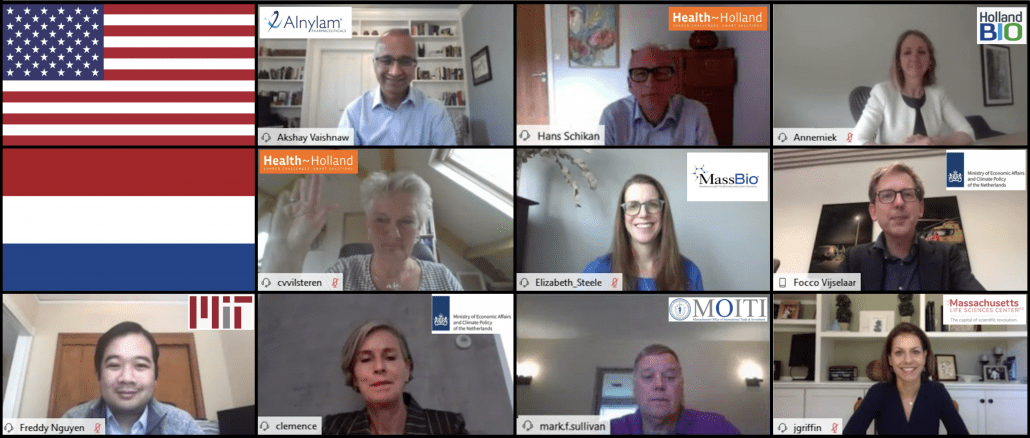
On Friday the 12th of June, a couple of international teams that joined the MIT COVID-19 Challenge at the beginning of April had the opportunity to pitch their solutions against COVID-19 to a group of Dutch stakeholders from the Life Sciences & Health community to explore possibilities to implement their solution in the Netherlands.

HollandBIO is proud supporter of the MIT COVID-19 Challenge and together with Health~Holland, Innovation Attaché Network in the US and the team of the MIT COVID-19 Challenge organized this follow-up pitch session. After the pitches, the Dutch stakeholders offered support for collaboration and implementation possibilities.

Due to great interest a lot of Dutch partners joined the pitch session including NeLL, Takeda, Invest in Holland, Noaber Foundation, Taskforce Health Care, RVO, NL Venture Builders, InnovationQuarter, ZonMW and the Dutch Taskforce for Applied Research (SIA). Especially in times when the focus tends to be national, support of cross-border collaboration should be supported.

← #nieuws

DSM to add world-leading animal nutrition and health specialty businesses with acquisition of Erber Group

,

Royal DSM, a global science-based company in Nutrition, Health and Sustainable Living, announces that it has reached agreement to acquire Erber Group for an enterprise value of €980m. The value of the transaction represents an EV/EBITDA multiple of about 14x the 2020 EBITDA (fiscal year ending September 2020). The transaction – which excludes two smaller units in the Erber Group – is expected to be earnings enhancing in the first year upon completion.

Erber Group’s specialty animal nutrition and health businesses, Biomin and Romer Labs, specialize primarily in mycotoxin risk management, gut health performance management, and food and feed safety diagnostic solutions, expanding DSM’s range of higher value-add specialty solutions. Romer Labs also complements DSM’s human nutrition and health offering to food industry customers. Sanphar and EFB, representing 7% of Erber Group’s total sales, are not included in this transaction.

The acquired businesses have combined sales of €330m and an Adjusted EBITDA margin above 20% for the twelve months to the end of March 2020, with a high single-digit organic sales growth rate over the past 5 years. The acquisition will be debt financed, with committed bridge financing in place. DSM continues to benefit from a strong balance sheet and remains committed to maintaining a strong investment grade credit profile.

With state-of-the-art research and manufacturing facilities and approximately 1,200 employees around the world, the acquisition of Erber Group is a unique strategic opportunity that provides revenue-enhancing synergies from the combined offering, global customer base, and complementary geographic strengths. Austrian-based Erber Group offers DSM the opportunity to enter the mycotoxin risk management market as the world leader and extends the company’s position as one of the top suppliers in the rapidly growing animal gut performance management market.

Mycotoxins occur as a result of natural fungus contaminants in animal feed and threaten the health of both animals and humans. In addition to increasing the risk of illness, mycotoxins also reduce the nutritional value of feed. Biomin’s patented and proprietary technology provides the most scientifically advanced mycotoxin protection available. Biomin is also a major producer of phytogenic and probiotic feed alternatives to antibiotics, which complements and strengthens DSM’s position in the rapidly growing global eubiotics market for improving animal gut health.

Romer Labs is at the forefront of diagnostic technology with innovative testing solutions for the analysis of mycotoxins in feed and food, food allergens and pathogens as well as veterinary drug residues, with accredited full-service labs in Austria, UK, USA and Singapore. DSM’s extensive global network of food and beverage customers as well as feed customers stand to benefit from Romer Labs’ expertise and the combined group’s data-based quality assurance offering.

The acquisition of Erber Group further strengthens DSM’s expertise and reputation as a leading provider of animal health and nutrition solutions for farm productivity and sustainability, with an emphasis on emissions reduction, feed consumption efficiency, and better use of water and land.

Source: DSM

← #nieuws

Upfield and Beyond Meat choose for the Netherlands

Plantbased leader Upfield announced plans to build a new state-of-the-art Food Science Centre and Beyond Meat will open a new co-manufacturing facility of its first production site outside the US. Both Upfield and Beyond Meat have chosen the Netherlands to realize their plans.

Both companies want to start with their activities in 2021. Upfield explains it has chosen for the Netherlands, because of the Wageningen ecosystem. Wageningen is considered as the Silicon Valley of the food industry and a world-class location for food innovation. Wageningen University is ranked as the world’s leading University in Agri-Food. Upfield will invest €50 million for their Food Science Center.

HollandBIO is working on an attractive business climate for all biotechnology related businesses, whether entrepreneurs work on innovation in plants, medicines, vaccines, cultured meat or biobased materials. By attracting these two big Agri-Food disruptors, the Netherlands demonstrates its potential role in helping to enable a transition to a more sustainable food system.

Read more     

← #nieuws

Kite Receives EMA approval for CAR-T Cell therapy manufacturing facility in Europe

,

Kite has received approval to implement a variation to the Yescarta Marketing Authorization from the European Medicine Agency (EMA) for end-to-end manufacturing. With this approval, Kite’s European manufacturing facility, designed and dedicated to the manufacture of individualized cell therapies, is now fully operational.

https://www.youtube.com/watch?v=IN8hLsgyZeM
Time-lapse video of the construction of Kite’s cell therapy manufacturing facility located outside of Amsterdam.

“Kite is focused foremost on the needs of patients living with cancer and we are proud to now manufacture cell therapy directly in Europe,” said Christi Shaw, Chief Executive Officer of Kite. “This facility will benefit both patients and healthcare professionals, allowing Yescarta to reach European treatment centers more quickly and reducing the time it takes to reach patients by almost a week.”

Kite has nearly 90 qualified treatment centers in 16 countries across Europe and Israel. The new European facility sits next to one of Europe’s largest airports, Amsterdam Airport Schiphol. This central location, with its transport links to the region, will reduce the delivery time to and from treatment centers. The facility has the capacity to produce therapy for up to 4,000 patients per year.

“With the enhanced technology and processes at our new facility we are pleased to be leading the next chapter in the manufacture and delivery of CAR T therapy,” said Charles Calderaro, Kite’s Global Head of Technical Operations. “Our new European manufacturing facility is dedicated to cutting-edge cell engineering, enabling patients to receive their potentially life-saving treatment more quickly.”

“The prognosis for patients with refractory large B-cell lymphoma is poor, with a median survival of approximately six months with the prior standard of care,” said Marie José Kersten, MD, PhD, Amsterdam University Medical Centers, Amsterdam, the Netherlands. “Timely access to cell therapy is critical, and the ability to manufacture CAR T cell therapies in Europe is welcomed by the clinical community.”

Source: Kite (press release)

← #nieuws

Eerste Krijn Rietveld Memorial Innovation Award uitgereikt

, ,

Baanbrekende biotech innovaties voor een betere wereld. Dat was de rode draad in Krijn Rietveld’s wetenschappelijke en professionele leven. Bovendien wist hij deze twee werelden als geen ander samen te brengen tijdens zijn loopbaan bij DSM. De Krijn Rietveld Memorial Innovation Award, een initiatief van DSM en Leiden University Fund, erkent en beloont excellent wetenschappelijk onderzoek dat bijdraagt aan een betere wereld. Omid Karami, een plantenwetenschapper van de Universiteit Leiden is de gelukkige eerste winnaar van de Award. 

Omid Karami heeft een gen ontdekt waardoor een plant na de bloei niet doodgaat, maar weer doorgroeit. Dat biedt ongekende mogelijkheden voor veel landbouwgewassen. In plaats van de plant volledig te oogsten, is doorgroei en vaker oogsten van dezelfde plant wellicht mogelijk.

Krijn Rietveld zat namens DSM jarenlang in het bestuur van HollandBIO en werd zeer gewaardeerd om zijn grote kennis en waardevolle inzet. HollandBIO ziet de Krijn Rietveld Memorial Innovation Award als een eervolle erkenning van Krijn’s bijdrage aan een duurzame samenleving.

Lees meer

https://www.universiteitleiden.nl/en/news/2020/06/omid-karami-wins-krijn-rietveld-memorial-innovation-award

← #nieuws

Werkgroep Gezondheid en Zorg van Nederlandse AI coalitie zoekt use cases

,

Nieuwe technologieën kunnen niet altijd rekenen op een rode loper in hun traject van lab naar praktijk, weten we bij HollandBIO maar al te goed. Daarom zijn we erg blij dat de Nederlandse Artificial Intelligence Coalitie (NLAIC) de vindbaarheid, matchmaking en samenwerking in het Artificial Intelligence (AI) ecosysteem wil verbeteren. De NLAIC werkt hiertoe aan een gestructureerd overzicht van AI-use cases in het domein Gezondheid en Zorg. Heb je een mooie use case die de inzet van Artificial Intelligence binnen dit domein in Nederland illustreert? Dien hem dan voor 16 juni via deze link in bij de NLAIC.

Uit de ingediende bijdragen selecteert de werkgroep Gezondheid en Zorg bovendien drie use cases, die zij als eerste gaan helpen met verdere opschaling. Zij zoeken hiervoor naar use cases die:

  • de potentie laten zien om op korte termijn maatschappelijke impact te maken met waardevolle AI innovatie in de gezondheid en zorg.
  • landelijk opschaalbaar zijn en eventueel snel uitbreidbaar zijn naar meer use cases.
  • breed gedragen zijn in een samenwerking van relevante partijen nodig voor opschaling
  • als het kan ook een van de randvoorwaarden voor het opschalen van AI positief beïnvloeden.

Bij de te kiezen use cases moet bovendien minstens één deelnemer van de NLAIC betrokken zijn. Use cases die na 16 juni worden ingediend worden wel zichtbaar voor de werkgroep, maar gaan niet mee in deze selectieronde.

Ben je een van de lucky three? Dan biedt de NLAIC een podium en hulp om de opschaling met manieren, middelen en partijen te versnellen en verbreden in Nederland. Zo presenteren deze cases zich op 6 juli tijdens “AI/Tech in a Day: Gezondheid & Zorg editie” in het bijzijn van de hoogste ambtenaar van het ministerie van Volksgezondheid, secretaris-generaal Erik Gerritsen, en neemt de NLAIC van tevoren voor elk van deze cases een korte video op. HollandBIO zegt: doen!

← #nieuws

Jaarverslag van de WBSO in 2019

, ,

In het vorige week gepubliceerde jaarverslag over 2019 van de WBSO, het fiscale overheidsinstrument dat R&D bevordert, komt naar voren dat aan ruim 20.000 bedrijven in totaal €1,2 miljard euro werd toegekend. Het instrument blijft daarmee een aanjager van innovatie door bedrijven in onder andere de biotech sector. Een aandachtspunt is dat het aandeel WBSO-aanvragen door start-ups in 2019 zowel relatief als absoluut is gedaald.

In het Jaarverslag komen verschillende uitsplitsingen terug die onder andere duidelijk maken welk type bedrijven gebruik maakt van de WBSO en in welke technologiegebieden zij vallen. Opvallend is dat van de 18 geclassificeerde technologiegebieden er drie (‘Biotechnologie’, ‘Medische wetenschappen & farma’ en ‘Plantaardige wetenschappen’) binnen het bredere biotech en life sciences domein vallen.  Daarmee hebben in totaal bijna 1.200 bedrijven uit onze sector gebruik gemaakt van de WBSO. De WBSO blijft daarmee een aantrekkelijk instrument voor biotech bedrijven dat investeringen in private R&D-activiteiten in Nederland aanjaagt.

Lees het WBSO jaarverslag 2019 hier terug.