← #nieuws

Looking back at hollandbio’s third CEO & Founder event in Amsterdam

, ,

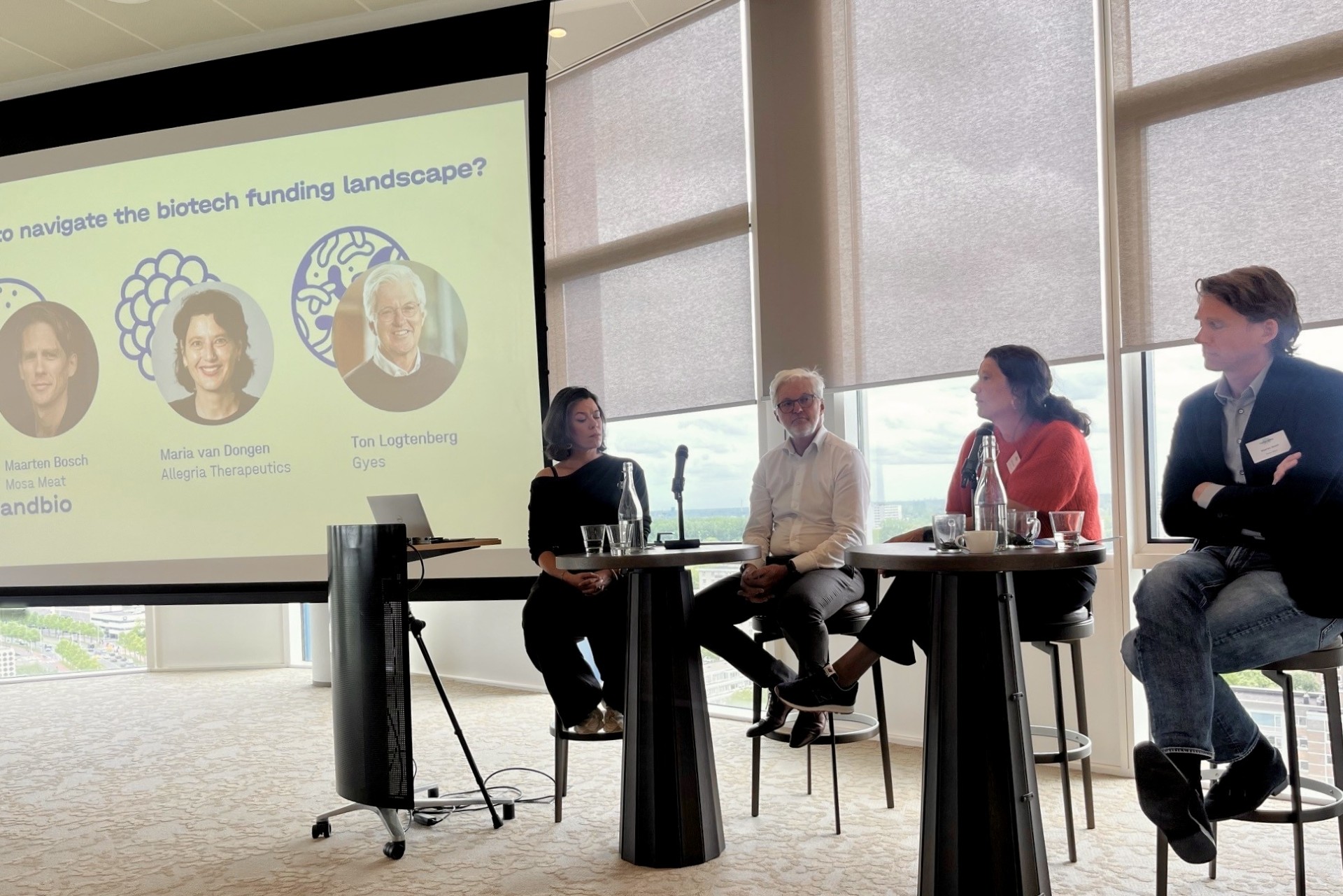
Last Tuesday, hollandbio’s CEO & Founder network brought together 50 biotech CEO’s and founders to meet, talk and network among peers. Ask a biotech entrepreneur about the biggest hurdles between lab and market and attracting funding will probably be high on the list. For this exclusive event, hollandbio members came together at the Nauta Dutilh office in Amsterdam to discuss that very important topic: funding.  

Doing a deal requires a sharp eye and a well-organised process

To set the scene, Ruud Smits, managing partner at Nauta Dutilh, pointed out some of the pitfalls and challenges of biotech funding. When closing a deal, the devil is often in the details. Options and choices can have major consequences, urging the need to be very critical when choosing investors and always checking agreements and contracts thoroughly. And – as always – making sure you seek advice and learn from peers or experts, is the wise thing to do.

Biotech funding requires careful planning and strategy

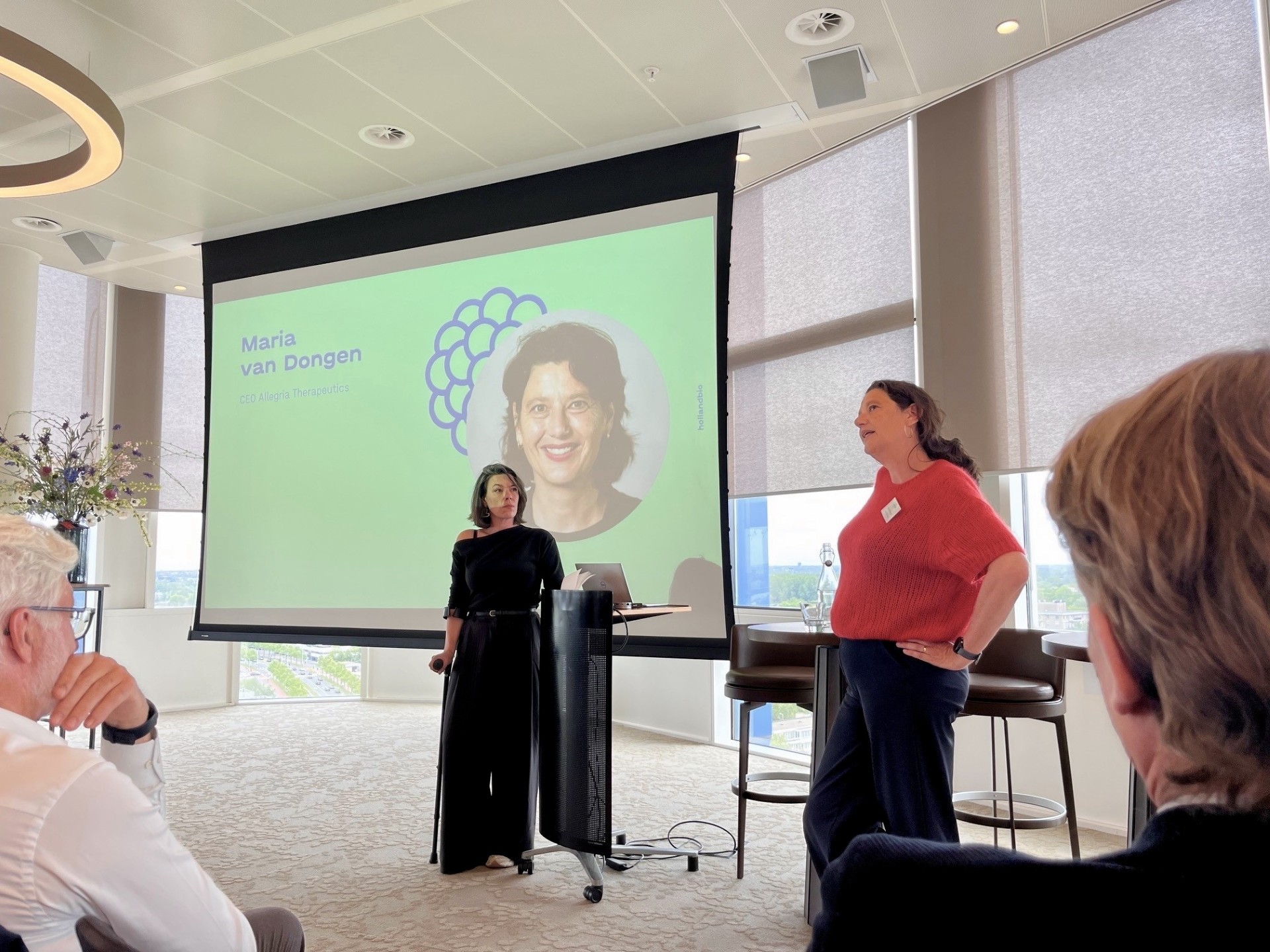
After the insightful intro, hollandbio’s Wieteke welcomed three renowned biotech entrepreneurs to the stage to join the panel discussion. Maria van Dongen, who, after gaining extensive drug development experience at several leading pharmaceutical companies, co-founded the Swiss Allegria Therapeutics. As the company’s CEO, she recently secured $5.1 million in seed extension funding to progress its lead program towards pre-clinical candidates.

Maarten Bosch joined cultured meat pioneer Mosa Meat seven years ago, after an extensive career in various start-ups in the corporate sector. As the company’s CEO, Maarten secured €15 million in funding early this year – a success even more impressive given the struggle and even shut down other cultivated meat companies currently face.

Finally, serial entrepreneur and investor Ton Logtenberg took the stage. Ton is no stranger to biotech success, being instrumental in the successful growth and multibillion-dollar exits of Crucell and Merus. As CEO of his new endeavour Gyes, Ton is well on his way to proving his brilliance once again, pushing forward a new, paradigm-shifting platform approach in precision antibody therapeutics.

Together, the panellists gave their personal and open takes and learnings on funding strategy, risks, and opportunities. Some insights:

  • There is no denying that the Chinese biotech industry is growing and is hard to outcompete on costs and speed. Yet there have been some examples of European companies that do similarly well. And yes, geopolitics is a force to consider; the panel agreed that if played well, competing with Chinese biotech still is possible.
  • To compete, Gyes carefully designed a distinctive structure and IP strategy:  a holding company that not only fosters and perfects the platform technology, but also acts as the perfect all-in service provider for its spin-out companies with specific programs. Combined with Gyes’ strategy not to file IP for its technology, might prove to be a game-changer in biotech entrepreneurship.
  • The importance of scenario planning was another topic the CEO’s agreed on. Without downsizing the need to design the perfect funding strategy too, success often results from carefully designed back-up plans – scenarios B, C, and D – as scenario A hardly ever plays out. Being prepared helps to seize other opportunities when they present themselves.
  • As most investors are flooded with business proposals, standing out is key to success. Making sure you understand an investor’s mandate and choose the best fit with your business helps you to do just that. Our panellists agreed that for a successful fundraise you need a compelling story as well as scientific excellence.

After this vibrant and interactive discussion, there was ample room to meet and continue the conversation over drinks – a high-level networking opportunity amongst peers highly valued by the attending CEOs and founders.

See you next time at our CEO & Founder event!
← #nieuws

Hollandbio welcomes Mosamatrix as a new member

Hollandbio connects, represents, and supports the Dutch life science sector. We are very proud that we already represent 270 companies: from start-ups, small and medium-sized companies to large companies, active in health, food, or the biobased economy. Today, we are proud to present MosaMatrix as our newest member.

An introduction by MosaMatrix:

“MosaMatrix develops a new class of hydrogels for 2D/3D cell-cultures, organ-on-chip and 3D bioprinting. Our first product is “NatureMatrix” an animal-free hydrogel combining biological performance with scalability, reproducibility, compatibility with automated high-throughput workflows. The hydrogel is based on patented oxidized alginate biopolymers with controlled gelation, tunable, dynamic mechanical properties and cell harvesting protocols. This enables advanced cell and organoid culture with integration in industrial workflows, such as automated liquid handling.  

Advanced 3D cell culture is a rapidly growing market for applications in next-generation drug discovery, disease modelling, organ on chip, organoid technologies and regenerative medicine. While the demand for scalable 3D cell culture is rapidly increasing, current hydrogel platforms pose a critical bottleneck hindering growth. Widely used animal-derived hydrogels offer biological performance but lack reproducibility, scalability and are not compatible with automation.  

MosaMatrix hydrogel performance has been demonstrated in multiple applications (cell and organoid culture and bioprinting).  The unique dynamic behavior, mimicking life-like conditions, has shown excellent tissue formation. The platform directly addresses the unmet need across the value chain, from end-users seeking biologically relevant hydrogels to industrial partners requiring reliable and processable materials for a scalable workflow. Our NatureMatrix  hydrogel delivers clear societal impact by accelerating developments of human disease models, reducing animal testing and enabling fast and more cost-efficient drug screening platforms. MosaMatrix can produce small amounts of its hydrogel and has started its first collaborations with potential customers. 

With our ambition to become a versatile platform for a broad range of human cell-lines we look forward to be a valuable partner for the Dutch life science ecosystem. Find  new collaborations and industrial partners, academia and start-ups to accelerate the use and benefits of 3D cell-cultures, ranging from academic research, new drug development to regenerative medicine.”

← #nieuws

Hollandbio welcomes Anacura as new member

Hollandbio connects, represents, and supports the Dutch life science sector. We are very proud that we already represent 275 companies: from start-ups, small and medium-sized companies to large companies, active in health, food, or the biobased economy. Today, we are happy to introduce our newest member Anacura, the independent analytical center of excellence providing end-to-end life science services – from early lab concept to fully regulated product. Headquartered in Belgium, Anacura offers scientifically-based and personalized laboratory solutions at uncompromising quality for biotech and pharma partners. A few words from the Anacura team:  

“Built on our 25+ years of experience, we have developed a unique, integrated CRO platform with fully equipped in-house laboratories that brings the expertise of three specialized units—Anabiotec, OHMX.bio, and Discovery Studio—under one roof, guiding your project seamlessly from early discovery to GxP regulatory approval.

Anabiotec offers analytical development, method validation, regulated testing (GxP) and quality control required to make sure your product is safe, reliable, and ready for clinical use and market. By our comprehensive analytical solutions, we help pharma and biotech navigate the complex regulatory requirements of drug development.

OHMX.bio employs multi-omics and bio-IT solutions to map out the complex biology behind your therapeutic. By looking deeply into DNA, RNA, epigenetics and proteomics we turn complicated biological data into clear, practical insights for research and clinical studies.

Discovery Studio is the biotech accelerator that act as your early-stage launchpad. By hands-on cell & gene lab work and in-depth data analysis, we figure out if the biological concept actually works, helping you validate your ideas quickly and confidently.

Our team stands out by its flexible and expert-led solutions from early discovery to GxP approval. Clients highlight our dedicated project management as a key asset, ensuring that milestones are consistently met on time and risks are mitigated.

As Business Development Manager for Anacura within the Netherlands, Laurens Raes facilitates the bridge between Dutch innovation and our unified CRO platform, and serves as your primary point of contact.”

← #nieuws

MEPs join biotech sector to urge moving forward with Biotech Act II

,

Members of the European Parliament are joining forces with the biotech sector to urge the European Commission to move forward with the promised Biotech Act II – echoing earlier calls from biotech actors to act now. In a letter sent to Executive Vice President Stéphane Séjourné, lawmakers and the European Biosolutions Coalition stress that Biotech Act II is not optional. While the first Act focused on pharmaceuticals, the second is essential to unlock the full biotech ecosystem. Without it, cross‑sector barriers will continue to block biotech solutions from reaching the market and scaling across the Single Market. Delays only make Europe slower, not safer, the signatories warn. “We risk missing a major competitiveness opportunity” – one that Europe simply cannot afford.

← #nieuws

Biotech beleidsmakers en bedrijven op bezoek bij hollandbio

,

Vorige week bracht hollandbio beleidsmakers en biotechbedrijven samen om tijdens een  Lunch & Learn te praten over de toekomst van biotech in Nederland en Europa. In de zaal zaten vertegenwoordigers van ministeries die werken aan de nationale biotechvisie en de Europese Biotech Act, RVO en Invest-NL, én bedrijven uit medische, voeding- en industriële biotech. Samen met hen spraken we open over wat nodig is om de ambities uit de Visie Biotech, het Rapport Wennink, het Industriebeleid en de Nationale Technologiestrategie waar te maken. SentryX, The Protein Brewery en Novonesis lieten zien hoe biotech nu al bijdraagt aan maatschappelijke uitdagingen, waar zij belemmeringen ervaren en welke randvoorwaarden nodig zijn om impact op te schalen. De rode draad: biotech maakt het leven beter, maar alleen als we samenwerken. En dat vraagt om vertrouwen, duidelijkheid en tempo.

← #nieuws

Dutch Life Sciences Trend Analysis 2026 – biotech is on the map, but still looking for a way up

, ,

While Dutch & European governments are prioritising biotech, the Dutch Life Science Trend Analysis shows a decline on multiple metrics. The number of companies founded, assets in (pre)clinical development & total funding amounts of last year all decreased compared to 2024. This came to light through the Dutch Trend Analysis Report 2026 from the leading global biotech database Biotechgate in collaboration with hollandbio. The annual report provides an in-depth look at funding patterns, company formation, and international benchmarks.

The growth we hoped for is not yet there

The 2025 data reinforce the ‘winner takes it all’ trend we flagged last year: an increasing concentration of capital among a small group of winners. In the report on 2024, Dutch venture financing continued to grow, showing a 10% increase compared to the previous year. And while hollandbio was hoping for a continuation of this growth, the report shows otherwise. The total biotech funding amount of 2025 is similar to that of 2024 (-2,3%), while the number of rounds is decreasing. This implies that although the average round size is increasing, total funding is not. Luckily, a few Dutch companies were able to raise significant funding in 2025, including Leyden Labs, Avidicure and The Protein Brewery.

The data sends out another worrying signal: the decreasing number of assets in development (-10%). Leading fields are still oncology, neurology and infectiology. As the risk of technical failure is high in biotech, a pipeline with sufficient assets in development is of crucial importance. In addition, since 2020, the number of companies founded has been declining. The international data show that this is not a Dutch problem, though: all benchmarked countries show a decline in company foundation. Hollandbio sees this as a real threat for the future, as today’s start-ups and clinical assets are tomorrow’s changemakers.

International Benchmark: ups and downs

Although it is a mixed bag, the international benchmark leaves room for some good news, too. The Netherlands scores excellently when it comes to the number of companies per million inhabitants: only Denmark and Switzerland do better. Also, the Dutch ecosystem is home to more food, agriculture and materials biotech compared to other countries. Yet, when looking at the health applications, specifically the assets in clinical development, we are down in the charts, with countries such as the United Kingdom, Denmark, Switzerland and the United States way ahead of us.

The US still play a different league compared to Europe when it comes to funding: even though the total equity capital raised there has declined significantly (-15%), US companies raised 4x the amount of equity capital. Also, the increasing amount of equity capital raised in China is relevant. Although not included in the report, the Chinese equity capital raised for biotech is over 50% of the total capital raised in Europe and growing(1).

Time to act now

The story told by the trend analysis is not a positive one for Europe and the Netherlands. The report’s data reflects reality – and must underscore the urgency of the challenges we face. European biotech is losing momentum to the US and China. Dutch companies keep looking at the US for an IPO and one of the only Dutch biotech’s listed in Amsterdam is openly doubting a focus on the US stock market. On top of that, securing early-stage funding remains a serious challenge and an increasing number of companies are filing for bankruptcy.

Europe needs to step up to remain a global player in biotech. Luckily, the European Commission and the Dutch national government see this, and have published plans to turn the tide: the EU Biotech Act, The Dutch Biotech Vision and Wennink Report present ambitious goals to help the EU biotech sector thrive. Unfortunately, nice words on paper do not fund start-ups or help companies scale – only actions do. It is time for bold moves. It is time to act now.

Through the challenges, we do see some positives too: the recent acquisition of Merus by Genmab, large funding rounds by Azafaros and Leyden Labs and the IPO of Dutch-tinted Agomab. At hollandbio, we continue to put effort in the best possible funding ecosystem for every stage of development, from early grants to M&A and IPO. We will remain committed to have more of these Dutch and European success stories in the future.

Do you have any questions or remarks on this Dutch Trend Analysis? Please reach out to hollandbio’s Max

(1). BiotechGate

← #nieuws

Dutch assessment of the EU Biotech Act: no guts no glory?

,

In December 2025, the European Commission unveiled Part I of the EU Biotech Act, a long-awaited signal that Europe aims to unlock biotech’s full potential. During the holidays, the Dutch government dove into the EU proposals to draft its assessment, a so-called BNC-fiche. And, as the Netherlands does not shy away from communicating its strong ambition when it comes to biotech, hollandbio had high hopes that the Dutch government would call for even bolder moves, including proper EU and national resourcing and a broader scope of the Act. The current act still risks falling short of being the breakthrough the EU needs in a highly competitive global landscape. But unfortunately, we felt the official assessment of the EU Biotech Act Part I to be somewhat disappointing.

As expected, the Dutch fiche does embrace biotech’s role in strengthening Europe’s competitiveness, along with attention to workability, harmonisation, and Dutch best practices. But at the same time, the overall stance is surprisingly cautious, in contrast to the previously published broad, forward‑leaning Dutch non‑paper and national biotech vision. Rather than seizing Europe’s opportunity to lead, the fiche places significant weight on feasibility, governance and constraints. Important points, certainly, but for a country that wants to lead in biotech by 2040, we expected stronger follow‑through from ambition to action.

That’s why hollandbio remains fully engaged, contributing to Parliamentary consultations, advising policymakers and feeding insights into both Part I and Part II of the act. Our overall goal, and corresponding asks, remains unchanged: an EU Biotech Act that works end-to-end for health, food and industrial biotech. Read our full analysis here.

← #nieuws

Werkbezoek van EIC-president Michiel Scheffers onderstreept belang van samenwerking in het bloeiende biotech ecosysteem

Afgelopen vrijdag bracht Michiel Scheffers, president van het European Innovation Council (EIC)-board, op uitnodiging van de gemeente Leiden een werkbezoek aan het Leiden Bio Science Park, en hollandbio’s Wieteke was erbij. Het EIC is namelijk een van de grootste deep tech-investeerders in Europa. Met een uitgekiende mix aan financieringsinstrumenten, van vroege fase tot scale-up, is het EIC voor hollandbio een lichtend voorbeeld om innovaties voor transities in energie, voedsel, materialen en gezondheid te realiseren. Goed nieuws dan ook dat het budget fors wordt opgehoogd naar € 34 miljard en nieuwe initiatieven met volop ruimte voor biotech, zoals STEP Scale-up, ruim baan krijgen.

Scheffers werd met open armen ontvangen door het bloeiende biotech-ecosysteem in Leiden. De gezamenlijke aanwezigheid was ook direct de belangrijkste boodschap: een doorslaand succes als het Leiden Bio Science Park kan alleen ontstaan wanneer alle neuzen dezelfde kant op staan. Het EIC, dat door passende financieringssamenwerking mede mogelijk wordt gemaakt, is daarbij een onmisbare schakel voor maatschappelijke én economische impact. Nederlandse ondernemers zijn ondanks de zeer geringe slagingskans buitengewoon succesvol in het verzilveren van EIC-financiering in Europa. Wat hollandbio betreft, speelt het EIC nu al een sleutelrol in het biotech-ecosysteem, die bovendien als blauwdruk kan fungeren voor het vormgeven en optimaliseren van nationale financieringsinstrumenten.  

← #nieuws

Hollandbio verwelkomt Syngenta Nederland

Hollandbio verbindt, vertegenwoordigt en ondersteunt de Nederlandse life sciences sector. We zijn supertrots dat we al meer dan 270 bedrijven vertegenwoordigen: van start-ups, midden- en kleinbedrijven tot grote bedrijven, actief in gezondheid, voeding of biobased economy. Vandaag verwelkomen we ons nieuwste lid, Syngenta Nederland, een wereldwijde leider in landbouwinnovatie en groentezaadveredeling. Syngenta Nederland stelt zich graag aan jullie voor:

Als onderdeel van Syngenta Group, één van ‘s werelds toonaangevende agrarische bedrijven met meer dan 53.000 medewerkers in ruim 100 landen, speelt Syngenta een cruciale rol in de ontwikkeling van duurzame oplossingen voor de voedselproductie. Syngenta is actief op twee hoofdgebieden: gewasbescherming en zaadveredeling. Met onze innovatieve gewasbeschermingsmiddelen helpen we telers wereldwijd hun gewassen te beschermen tegen ziekten, plagen en onkruiden, waarbij biologische gewasbescherming een belangrijke pijler is. Daarnaast bieden we digitale precisielandbouwtools die telers ondersteunen bij hun teelt. Ook zijn we een belangrijke speler in de zaadveredeling, waar we ons richten op de ontwikkeling van hoogwaardige rassen voor de professionele teler.

In Nederland vind je één van de grootste groentezaadveredelingsvestigingen, al bijna 160 jaar stevig geworteld in Enkhuizen, het hart van ‘Seed Valley’. Deze regio in Noord-Holland staat wereldwijd bekend als hét centrum van zaadveredeling en zaadinnovatie. Onze groentezaadveredeling combineert traditionele veredelingstechnieken met geavanceerde biotechnologie en data-analyse. Onze veredelingsprogramma’s richten zich op rassen die niet alleen een hogere opbrengst leveren, maar ook beter bestand zijn tegen ziekten, klimaatverandering en andere uitdagingen. Denk aan tomaten met verbeterde houdbaarheid, paprika’s met verhoogde weerstand tegen ziekten, of komkommers die minder water nodig hebben.

Jan Willem Griep, algemeen directeur van Syngenta Nederland: “Het lidmaatschap van hollandbio past perfect bij onze missie om innovatie en samenwerking centraal te stellen. De Nederlandse life sciences sector staat wereldwijd bekend om haar expertise en ondernemerschap. Als nieuw lid kunnen we kennis delen, leren van elkaar en samenwerken aan innovaties die ertoe doen. Ons werk is daar een mooi voorbeeld van: met wetenschap en innovatie dragen we bij aan een veerkrachtige en duurzame voedselproductie.”

Voor meer informatie over gewasbescherming kunt u terecht bij Ronald Jager (ronald.jager@syngenta.com) en voor vragen over groentezaadveredeling bij Janneke van der Hart (janneke.van_der_hart@syngenta.com)

Bron: Syngenta Nederland
← #nieuws

Hollandbio welcomes Akin Solutions as new member

Hollandbio connects, represents, and supports the Dutch life science sector. We are very proud to represent over 270 companies: from start-ups, small and medium-sized companies, to large companies, active in health, food, or the biobased economy. Today, we are happy to introduce Akin Solutions – a Dutch biotech company that turns rubber waste into high-quality recycled material. Their enzyme-powered biorefinery makes it possible to recycle rubber to a virgin-like quality while also producing valuable coproducts. This enables reuse in demanding applications such as tires and industrial products instead of being downcycled.

Rubber is essential to modern life, from mobility to medical devices, but its supply chain is under pressure. Natural rubber drives deforestation and supply risks, while synthetic rubber relies on fossil resources and has a high carbon footprint. At the same time, most end-of-life rubber cannot be recycled into materials suitable for high-performance use.

Akin Solutions addresses this challenge by refining devulcanized rubber through targeted processing and separation to restore performance and consistency without degradation. Their biorefinery platform is designed to integrate into existing recycling facilities, making deployment easier. Their molecular imaging services help verify how the resulting material performs in real-world products.

Akin Solutions seeks partnerships with recyclers and manufacturers to advance their technology and demonstrate industrial-scale performance. By joining HollandBio, they aim to stay informed on political developments, address obstacles, and further integrate into the Dutch biotech ecosystem for materials development.