← #nieuws

Aduro Biotech Presents Preliminary Results Phase 1 Trials of STING agonist ADU-S100

Aduro presented preliminary results from early clinical studies with the stimulator of interferon genes (STING) agonist ADU-S100 in heavily pre-treated patients with solid tumors and lymphomas at the Society for Immunotherapy of Cancer 33rd Annual Meeting (SITC 2018). The data showed encouraging initial clinical response both as a monotherapy and in combination with the ant-PD1 antibody Spartalizumab. Aduro and collaborator Novartis embarked on this first-in-human trial as an important first step in characterizing the safety profile and mechanism of ADU-S100 and its ability to activate the STING pathway.

Data Highlights from ADU-S100 Monotherapy Trial

The Phase 1 dose escalation and dose expansion clinical trial is designed to evaluate the safety, tolerability and clinical activity of ADU-S100 in patients with advanced, metastatic treatment-refractory solid tumors or lymphomas. In this multicenter, open-label trial, ADU-S100 is administered intratumorally on Days 1, 8 and 15 of a 28-day cycle.

The trial has enrolled 41 patients, with 40 patients evaluated for response. The median number of prior anti-cancer treatments was four (range 0-15). More than half of patients (53.7%) received prior therapy with a checkpoint inhibitor.

  • More than 20 types of cancer have been treated in this trial, including Merkel cell, parotid gland, colorectal, endometrial, ER+ and triple-negative breast cancer, esophageal, collecting duct carcinoma, ovarian, Hodgkin’s disease, hemangioepithelioma and other cancers.
  • Doses of 50-3200 mcg have been explored in this presentation; enrollment is ongoing for additional patient cohorts.
  • No dose-limiting toxicities have been reported at these dose levels. The most common (≥10% of patients) treatment-related adverse events (TRAEs) were pyrexia, injection site pain and headache. Grade 3/4 TRAEs included increased lipase and elevated amylase, tumor pain, dyspnea, respiratory failure and injection site reaction.

Clinical and Biomarker Activity

  • Importantly, increases in key systemic cytokines, including IL-6, MCP-1 and IFN-b, were observed after administration, indicating target engagement of ADU-S100 and activation of the STING pathway.
  • Two of the 40 patients treated had a partial response (PR) – one patient with Merkel cell carcinoma and one patient with parotid gland cancer who had received prior anti-PD-1 therapy.
  • 11 patients achieved stable disease (SD), including five patients who had received prior checkpoint inhibitor therapy.
  • Three patients with SD remain on study and continue to receive treatment, including one patient with collecting duct carcinoma who has been on study for greater than one year.
  • On-treatment tumor biopsies showed increases in CD8+ T cells in injected tumors in a subset of patients, including those with Merkel cell, collecting duct and esophageal carcinomas. Aduro and Novartis are continuing to evaluate additional pathology and other biomarkers to assess the pharmacological activity of ADU-S100 in these patients.

“We are encouraged by the data obtained from the dose escalation portion of this first-in-human trial of ADU-S100 in heavily pre-treated patients with a diverse set of advanced cancers,” commented Stephen T. Isaacs, chairman and chief executive officer of Aduro Biotech. “Based on the safety profile and interesting signals observed from the clinical approach to date, we expect to collect additional biomarker data and have begun to enrich monotherapy dose cohorts with additional patients of select tumor types. At the same time, we have expanded the breadth of our joint development program with our colleagues at Novartis to focus on combination with checkpoint inhibitors in melanoma and other homogeneous patient populations where we seek to deliver clinical benefit to patients in need.”

In September 2018, this trial was amended to include a study arm evaluating ADU-S100 in combination with ipilimumab at its approved dose and schedule. Following a short dose escalation, the expansion phase aims to enroll patients with cutaneously and viscerally accessible melanoma who have relapsed or are refractory to PD-1 inhibitors.

Ongoing Phase 1b Trial of ADU-S100 + Anti-PD-1 Monoclonal Antibody Spartalizumab

A Phase 1b dose escalation and dose expansion clinical trial is ongoing to evaluate the safety and preliminary efficacy of ADU-S100 in combination with spartalizumab (PDR001), Novartis’ investigational anti-PD-1 monoclonal antibody (see www.clinicaltrials.gov, identifier NCT03172936). The multicenter, open-label trial is currently enrolling patients with advanced, metastatic treatment-refractory solid tumors or lymphomas and is evaluating two treatment schedules of ADU-S100 in dose escalation with a fixed dose of spartalizumab. Patients in Group A receive a fixed dose of intravenous spartalizumab on day 1 and an intratumoral injection of ADU-S100 three times (day 1, 8, 15) in a 28-day cycle. Patients in Group B receive a fixed dose of intravenous spartalizumab on day 1 and an intratumoral injection of ADU-S100 on day 1 of every 28-day cycle.

  • The dose escalation combination trial has enrolled 50 patients with multiple cancers and who received multiple lines of prior therapies including prior immunotherapy.
  • Patients have been treated with full-dose PDR001 and increasing dosing of intratumoral ADU-S100 (50-400mcg); enrollment is ongoing for additional patient cohorts.
  • No dose-limiting toxicities have been reported.

In the early dosing cohorts of the ongoing study of ADU-S100 in combination with spartalizumab, preliminary observations include: 1) clinical responses observed in several tumor types, including two patients who had previously demonstrated responses to checkpoint inhibitor therapy alone; 2) reduced tumor volume in injected and non-injected lesions in some patients; 3) several patients remained on study longer than 6 months; and 4) safety profile consistent with what has been observed in the ADU-S100 monotherapy study.

Isaacs continued, “While still early, the preliminary observations emerging from initial dose cohorts of ADU-S100 plus spartalizumab are promising. In particular, the observation of clinical benefit in patients who received prior PD-1 therapy may provide further evidence supporting the synergy between STING and checkpoint inhibitor therapy that was previously demonstrated by our preclinical results. Extensive biomarker analysis is ongoing to assess biological activity. We and Novartis are committed to further exploration of the potential of ADU-S100 as a combination agent with both spartalizumab and ipilimumab in dose escalation and expansion into homogeneous patient populations. We look forward to seeing how these data evolve over time and expect to report on the results of these studies at future medical meetings.”

Source: Aduro Biotech
 

← #nieuws

Vlaanderen en Nederland bundelen krachten op het gebied van Personalised Medicine

,

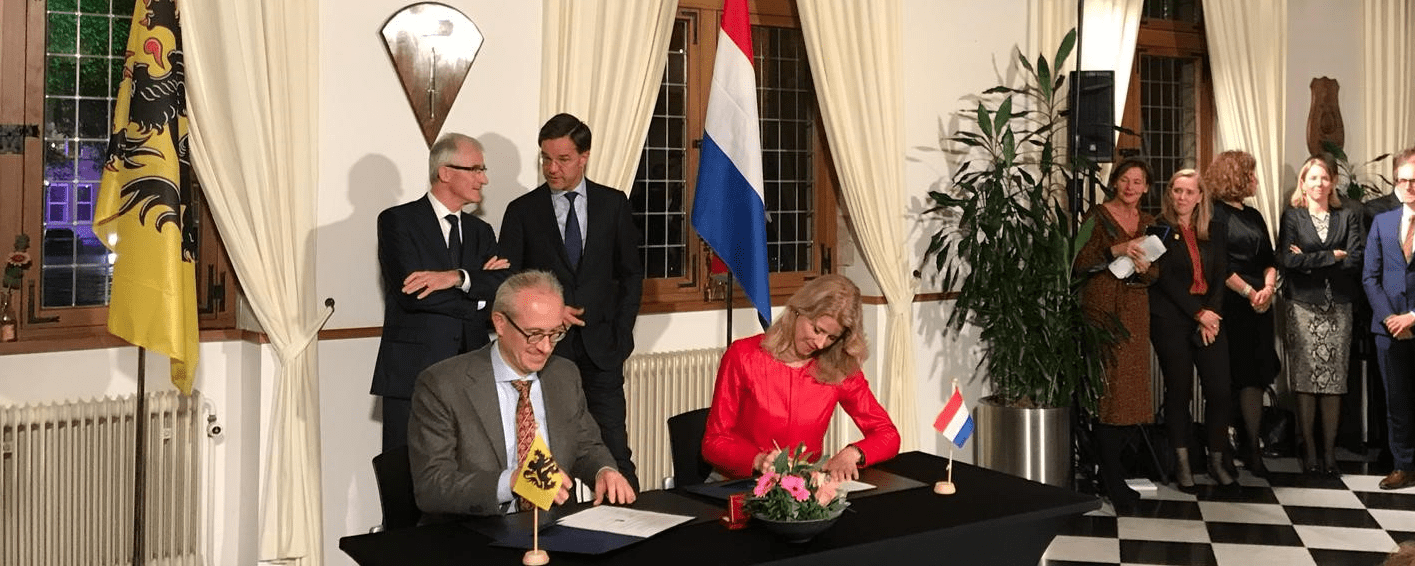
Tijdens de Vlaams-Nederlandse politieke topontmoeting op 5 november in Middelburg is een Memorandum of Understanding (MoU) ondertekend door staatssecretaris Mona Keijzer van het ministerie van Economische Zaken en Klimaat (EZK) en Secretaris-generaal Johan Hanssens namens Minister Muyters van het Vlaamse departement van Economie, Wetenschap en Innovatie (EWI) op het gebied van Personalised Medicine. Hiermee wordt samenwerking tussen de Lage Landen op dit thema versterkt voor de komende vijf jaar.


Vlaanderen en Nederland werken al twee jaar succesvol samen aan   regeneratieve geneeskunde, middels een publiek-private samenwerking genaamd Regenerative Medicine Crossing Borders (RegMed XB). Een uitbreiding van de samenwerking tussen de Lage Landen op een breed scala van onderwerpen binnen personalised medicine lijkt dan ook een mooie vervolgstap. De ondertekening van het MoU op 5 november heeft als doel om de komende vijf jaar intensief samen te werken aan missiegedreven onderzoek en ontwikkeling, innovatie en ondernemerschap op het gebied van de  personalised medicine. Met de MoU beogen Vlaanderen en Nederland de krachten van zowel private als publieke partijen over de landsgrenzen te bundelen.


De ondertekening van het MoU vond plaats in het bijzijn van minister-president Rutte en zijn Vlaamse ambtsgenoot Bourgeois en wordt in het voorjaar van 2019 opgevolgd door een gedetailleerde onderzoeksagenda. Deze agenda betreft in ieder geval  het bestaande subthema regeneratieve geneeskunde, maar ook de additionele subthema’s: cell-based technologies; preventie en leefstijlgeneeskunde; personal data infrastructuur en management. Hiermee vormen Vlaanderen en Nederland een gezamenlijke agenda waarin de ambities staan voor baanbrekende technologieën als Organ-on-a-Chip en data FAIR principes. Door het bundelen van krachten over de grens worden  nieuwe combinaties van expertises en technologieën samengebracht, die vervolg opgeschaald kunnen worden en beschikbaar komen voor grote groepen patiënten.


De Topsector Life Sciences & Health (Health~Holland) werkt komende maanden aan het programma en de onderzoeksagenda samen met het ministerie van EZK, het departement EWI en betrokken stakeholders.


Bron: Health-Holland

← #nieuws

Dr. Axel Mescheder benoemd tot CEO en CMO Cristal Therapeutics

,

Cristal Therapeutics heeft Dr. Axel Mescheder benoemd tot Chief Executive Officer (CEO). Hij zal ook de functie van Chief Medical Officer (CMO) op zich nemen. Cristal therapeutics is een farmaceutisch bedrijf dat nanomedicijnen ontwikkelt voor de behandeling van kanker en andere aandoeningen.


Dr. Mescheder was hiervoor Chief Medical Officer van de Groningse biotechonderneming Lanthio Pharma, dochteronderneming van het Duitse MorphoSys AG. Dr. Mescheder heeft meer dan 25 jaar ervaring op het gebied van klinische ontwikkeling, opgedaan in senior directiefuncties waaronder Vice President Medical en Regulatory Affairs Europe bij Medpace, en Chief Medical and Development Officer bij TopoTarget en MediGene. Hij bekleedde verschillende functies op het gebied van onderzoek en ontwikkeling bij het Genetics Institute, Wyeth-Ayerst Research – een divisie van Pfizer – alsmede bij Centeon Pharma, CSL Behring en Hoffman-La Roche.


Dr. Axel Mescheder heeft ruime ervaring met het ontwikkelen, implementeren en aansturen van klinische ontwikkelingsprogramma’s die hebben geleid tot succesvolle productregistraties, zowel in Europa als in de Verenigde Staten. Zijn expertise strekt zich uit over meerdere therapeutische gebieden, waaronder oncologie, immunologie en inflammatoire aandoeningen.


Dr. Simon Sturge, voorzitter van Cristal Therapeutics Raad van Commissarissen, zegt: “Namens onze raad en managementteam verwelkom ik Axel bij Cristal Therapeutics. Hij versterkt het managementteam op een cruciaal moment voor Cristal Therapeutics, nu met het kandidaat-geneesmiddel CPC634 een klinische fase 2 studie in patiënten met eierstokkanker is gestart. Met zijn ervaring op het gebied van klinische ontwikkeling van innovatieve producten en oncologie komt hij op het juiste moment bij onze onderneming om deze programma’s te gaan leiden.”


Zijn benoeming volgt op het besluit van medeoprichter Dr. Joost Holthuis om deze maand terug te treden als Chief Executive Officer. Dr. Joost Holthuis zal Dr. Mescheder de komende maanden ondersteunen tijdens de introductie in zijn nieuwe functies.


Dr. Simon Sturge voegt hieraan toe: “Ik wil ook Joost bedanken voor zijn bijdragen en toewijding sinds de oprichting van Cristal Therapeutics in april 2011. Zijn inspanningen hebben geresulteerd in de transformatie van Cristal Therapeutics van een platformtechnologie-onderneming naar een farmaceutische onderneming met producten in het klinisch ontwikkelingsstadium. Hij heeft een uitzonderlijk team opgebouwd dat een pijplijn van nieuwe therapieën heeft ontwikkeld en verschillende samenwerkingen met andere farmaceutische bedrijven heeft gerealiseerd.”


In een reactie op zijn benoeming voegde Dr. Mescheder toe: “Ik ben bijzonder blij Cristal Therapeutics te kunnen versterken in dit belangrijke stadium van haar ontwikkeling. Ik kijk er naar uit om met het managementteam en de Raad van Commissarissen samen te werken en de veelbelovende pijplijn van oncologische nanomedicijnen verder te ontwikkelen.”


Dr. Mescheder is medisch specialist in de farmacologie en toxicologie en behaalde een Dr. Med. graad aan de Chr.-Albrechts-Universiteit in Kiel, Duitsland.

Bron: Cristal Therapeutics

← #nieuws

Facio achieves first-ever in vivo proof of principle in FSHD

Facio Therapies has announced that oral treatment with one of Facio’s lead candidates results in significant reduction of the human muscle-toxic DUX4 protein in mice engrafted with human FSHD-affected muscle cells. Facio is the first in the FSHD field to achieve proof of principle in an animal model (“in vivo”).

The key event in the progressive muscle wasting disease FSHD is the undue production of the DUX4 protein in skeletal muscle. DUX4 sets in motion a cascade of biochemical events that eventually result in the devastating effects of FSHD. In people without FSHD, the production of DUX4 in skeletal muscle is repressed by regulatory mechanisms. Facio’s single goal is to develop therapies that restore this repression as much as possible.

Together with its drug discovery partner, Evotec, Facio successfully developed a stable mouse model based on engrafting human FSHD-affected muscle precursor cells (called “myoblasts”) onto a mouse thigh muscle. These human FSHD myoblasts then fuse and develop into mature muscle cells (called “myotubes”), which produce DUX4. Facio’s mouse model represents an important improvement over similar models, which either rely on engrafting human myotubes with low throughput, or on engrafting so-called “immortalized” FSHD cells that deviate from natural FSHD biology because they have been altered to remain alive indefinitely. Facio, however, approximates natural FSHD biology as much as possible by using unadulterated (or “primary”) FSHD-affected muscle cells in its mouse model. Primary FSHD muscle cells are also the basis of Facio’s unique high-throughput DUX4 screening platform.

“Achieving stability was the main challenge”, said Facio’s Managing Director, David Dasberg, “but after about six months we were able to stably engraft human FSHD myoblasts in one mouse thigh and healthy human myoblasts in the other thigh, so that each mouse serves as its own control. DUX4 expression does occur in FSHD myotubes but not in healthy myotubes, which validates the model. Then, in a single-concentration experiment, we orally treated mice with one of our lead candidates or with a placebo. This resulted in a statistically highly significant reduction of DUX4 and of certain DUX4 target genes in human FSHD-affected myotubes. Evidencing that an orally administered compound is able to suppress human DUX4 in a representative animal model is a major leap forward in developing an FSHD therapy. We are extremely pleased with these results, all the more so because chemical optimization of our lead candidates for specific use in FSHD will further improve their efficiency at reducing DUX4.”

Facio has begun expanding its in vivo proof of principle by including other lead candidates, by performing dose-response experiments, and by studying the effect of lead candidates on human muscle cell formation. Together with lead optimization, this will enable selecting two lead compounds for government-mandated pre-clinical safety studies. The lead compound with the best overall performance in terms of efficacy and safety will be taken into a first-in-human clinical trial. As announced previously, Facio currently plans to start a first-in-human trial in the second half of 2021. In consultation with leading clinical experts, Facio is developing an integrated regulatory and clinical development strategy specific to FSHD. “That strategy is the last barrier on the way to clinical trials,” explained David. “We are confident we will cross that barrier, just as we successfully crossed the barrier of establishing a primary-cell-based DUX4 screening platform and then the barrier of demonstrating in vivo proof of principle.”

David stressed that in vivo data represent a key milestone along the way to clinical trials. “It has been said that an FSHD-relevant animal model is technically impossible. We now show that this assertion is incorrect. This has important consequences for the preparation of clinical studies. It is risky to jump from the relatively simple reality of a dish (“in vitro”) straight into the highly complex reality of people with FSHD. After all, results achieved in a dish say nothing a compound’s ability to enter FSHD-affected muscle, or about the dose required to reach the desired effect in such muscle. High doses increase the risk of side effects, especially because an FSHD therapy will be chronic. These risks are mitigated by in vivo proof-of-principle data. Such data should be seen as a crucial component of a regulatory submission for the initiation of a first-in-human study (known as an IND in the US, and as an IMPD in Europe).”

Kees van der Graaf, Facio’s Chairman, noted: “Only two years ago, we were the first to enable reliable quantification of the DUX4 protein in primary FSHD muscle cells. In fact, we still are the only one in the FSHD field with a fully automated, high-throughput DUX4 screening platform. Now, we are the first in the FSHD field to achieve in vivo proof of principle. This double first demonstrates the power of our single focus on FSHD and our commitment to rigorous R&D. People with FSHD need real progress, and real progress requires rigor. We fully intend to stay the course as we prepare for clinical studies.”

Source: Facio Therapies

← #nieuws

Cristal Therapeutics Initiates Phase 2 Clinical Trial of Innovative CriPec® Nanomedicine Drug Candidate in Ovarian Cancer

Cristal Therapeutics, a clinical stage pharmaceutical company developing unique nanomedicines for the treatment of cancer and other diseases, announced that the first patient has been dosed in its Phase 2 clinical trial of lead nanomedicine candidate CPC634 for patients with platinum-resistant ovarian cancer.

CPC634 is a new drug modality. It combines CriPec® nanoparticles with docetaxel (Taxotere®), a clinically validated chemotherapy, as its therapeutic payload. This nanomedicine candidate has been designed to enable enhanced tumour accumulation and localised drug release at the target site, with the goal of boosting therapeutic efficacy. In addition, it is anticipated that CPC634 will overcome the shortfalls associated with current docetaxel products, including toxic systemic side effects.

Dr Joost Holthuis, Cristal Therapeutics’ CEO and co-founder said, “Results from our Phase 1 NAPOLY study demonstrated that CPC634 can be administered safely and was well tolerated by patients with advanced solid tumours. CPC634 also demonstrated encouraging signs of efficacy and reduction in systemic side effects commonly seen with docetaxel.”

Professor Jonathan Ledermann, BSc MD, FRCP, UCL Cancer Institute, London, and Principal Investigator added: “Treatment of platinum-resistant ovarian cancer is an area of high unmet medical need and this trial will give us the opportunity to assess both the therapeutic efficacy of CPC634 and its potential to reduce toxic systemic side-effects such as neutropenia and alopecia, seen with the current standard of care.”

The primary objective of the trial will be to determine the response rate as measured by RECIST, a standard unbiased method for assessing whether a tumour shrinks, stays the same, or gets bigger, with CPC634 monotherapy. The clinical study will be conducted in 10 centres across the UK, Belgium, Netherlands, and Spain.

Source: Cristal Therapeutics

← #nieuws

Galapagos and AbbVie restructure CF collaboration

,

Galapagos and AbbVie announce a restructuring of their cystic fibrosis (CF) alliance; AbbVie takes over all programs in CF and continues the development of a triple combination therapy for CF.

AbbVie will obtain exclusive worldwide rights to the current CF investigational drug candidate portfolio developed by the two companies in the course of the collaboration. The portfolio includes all potentiator and corrector candidates. AbbVie will be responsible for all future activities and will bear all costs associated with this portfolio in CF going forward.

Galapagos will receive an upfront payment of $45 million from AbbVie. Galapagos will be eligible to receive up to $200 million in additional milestone payments from AbbVie pending completion of certain development, regulatory, and commercial achievements in CF by AbbVie. In the event AbbVie receives regulatory approval and realizes commercial sales in CF, Galapagos is further eligible to receive royalties ranging from single digit to low teens. AbbVie further agrees to pay Galapagos tiered single digit royalties of global commercial sales, if approved, from these candidates achieved in indications outside of CF.

Galapagos retains exclusive global commercial rights to develop GLPG2737, a candidate C2 corrector, in all indications outside of CF. AbbVie is eligible for future milestone payments and tiered single digit royalties on future global commercial sales, if approved, in indications outside CF.

“We are very pleased with the outcome of our discussions with AbbVie regarding the future of the CF portfolio. We believe that AbbVie is well-equipped to further develop this CF portfolio and to come up with a competitive triple combination product for CF patients,” said Onno van de Stolpe, CEO of Galapagos. “Galapagos’ strength is new mode of action programs. Our pipeline is robust, and we will continue to focus our resources on these innovative programs.”

Source: Galapagos

← #nieuws

Alexion and Dicerna to Collaborate on RNAi Therapies for Complement-Mediated Diseases

Alexion and Dicerna have announced a collaboration to discover and develop RNA interference (RNAi) therapies for complement-mediated diseases. An RNAi-based approach to blocking the production of complement pathway factors offers the potential to inhibit the uncontrolled complement activation that leads to many diseases. The agreement provides Alexion with exclusive worldwide licenses as well as development and commercial rights for two of Dicerna’s preclinical, subcutaneously delivered GalXC™ RNAi molecules and an exclusive option for other preclinical GalXC RNAi molecules for two additional targets within the complement pathway.

“With Soliris, Alexion has demonstrated the transformative impact of complement inhibition on multiple serious and debilitating diseases,” said John Orloff, M.D., Executive Vice President and Head of Research & Development at Alexion. “This collaboration provides the opportunity to continue building on our more than two decades of complement expertise using Dicerna’s proprietary GalXC RNAi technology platform, which provides a potentially promising new way of inhibiting the uncontrolled complement activation that we know plays a significant role in many devastating diseases.”

“Dicerna’s proprietary GalXC technology is designed to silence the expression of disease-driving genes in a way that is highly specific, generally well tolerated, and allows for convenient, infrequent subcutaneous administration. Having recently demonstrated clinical proof-of-concept for DCR-PHXC, our lead program for the treatment of primary hyperoxaluria, we are eager to expand and advance our pipeline of innovative GalXC therapies, including both proprietary and partnered programs,” said Douglas M. Fambrough, Ph.D., President and Chief Executive Officer of Dicerna. “Our collaboration with Alexion provides access to the deep expertise and resources of an established leader in complement-mediated diseases. We look forward to working with Alexion to discover and develop promising new RNAi therapies.”

Under the terms of the agreement, Alexion and Dicerna will collaborate on the discovery and development of subcutaneously delivered GalXC RNAi molecules directed to two complement pathway targets for the treatment of complement-mediated diseases. In addition, Alexion will have the right to exercise options, for additional payment, for two additional GalXC RNAi molecules directed to complement pathway targets. Dicerna will lead the joint discovery and research efforts through the preclinical stage, and Alexion will lead development efforts beginning with Phase 1 studies. The agreement provides Alexion with exclusive worldwide licenses and commercial rights to the GalXC RNAi molecules developed in the collaboration. Dicerna will receive an immediate upfront payment of $22 million, with Alexion making a concurrent $15 million equity investment in Dicerna at a premium to market as of the collaboration effective date. The collaboration also provides for potential additional development and approval-related milestone payments of up to $105 million per target, plus sales milestones and mid-single to low-double digit royalties on future product sales.


← #nieuws

JAMA publishes Phase II recAP data for sepsis-associated Acute Kidney Injury

AM‐Pharma, a biopharmaceutical company focused on the development of recombinant human Alkaline Phosphatase (recAP) for inflammatory diseases, has published data in the prestigious Journal of the American Medical Association (JAMA) of its recently completed STOP-AKI Phase II study of recAP in the treatment of sepsis-associated Acute Kidney Injury (AKI). Simultaneously, the results were presented at European Society of Intensive Care Medicine in Paris. Additionally, new data on recAP’s mode of action were presented October 25th at the American Society of Nephrology Kidney Week in San Diego.

Professor Peter Pickkers, MD PhD, Chair of Experimental Intensive Care Medicine, Radboud University Medical Center, and principal investigator of the STOP-AKI study said: “Although the study did not meet its primary endpoint of short-term improvement in kidney function in the first 7 days, it did show long-term improvement in kidney function and very importantly a 40% relative reduction in mortality over placebo. In the absence of any drugs approved for this condition, these exciting clinical outcomes warrant further research to confirm these findings and to make this treatment available to patients.”

Prof. Pickkers is presenting the results of the randomized clinical study at today’s Hot Topics session at ESICM in Paris at 16:40 CET.

In addition, investigations at the institutions of Professor Mark D. Okusa and Professor Bruce Molitoris revealed more detail into recAP’s mode of action. Their research showed that protection from kidney injury is mediated by dephosphorylation by recAP of ATP to adenosine and activation of adenosine A2a receptors (A2aR).

Dr. Okusa, Professor of Medicine and Chief, Division of Nephrology and Director, Center for Immunity, Inflammation and Regenerative Medicine at University of Virginia, School of Medicine, and Dr. Molitoris, Professor of Medicine, former Director of Nephrology and the Indiana Center for Biological Microscopy at Indiana University noted: “The mode of action appears to be an elegant, double effect; in the first instance recAP inactivates pro-inflammatory ATP, and the resulting formation of adenosine further reduces inflammation through the immunosuppressive adenosine A2a receptor pathway.”

Professor Diane L. Rosin from Dr. Okusa’s research group will present the results at the annual meeting of the American Society of Nephrology in San Diego; Session Title: AKI: New Players and New Mechanisms, October 25th from 18:00 PT (session room 6D).

Erik van den Berg, CEO of AM-Pharma said: “We are excited to share the clinical trial results in JAMA and scientific conferences. We are now preparing for the pivotal study to confirm the STOP-AKI study results, which could have a significant impact on patients with Acute Kidney Injury, for whom there is currently no treatment available.”

Previously, the US Food and Drug Administration granted Fast Track designation for recAP for treatment of sepsis-associated AKI. AKI involves inflammatory processes in the kidney which can lead to complete loss of renal function and is associated with high mortality rates.

Source: AM-Pharma

← #nieuws

Digitale hulp voor vaccinatiedebat in de maak

Noodzaak en vermeende gevaren van vaccinatie tegen ziekten zijn volop in discussie. De Koninklijke Nederlandse Akademie van Wetenschappen (KNAW) hield er maandag in Amsterdam een symposium over.

Werden prikken in ons land vroeger vooral door wat kleinere groepen geweigerd uit geloofsovertuiging, nu is er vooral sprake van een groeiend aantal weigeraars onder jonge hoogopgeleiden, die bijvoorbeeld vinden dat de natuur zijn werk moet doen of ervan uitgaan dat het middel erger is dan de kwaal.

Zo zijn er mensen die denken dat je van een prik autistisch kunt worden. Intussen grijpt mazelen in Europa steeds forser om zich heen (al speelt dat nog amper in Nederland). Aan de andere kant was het vaccin tegen meningokokken in ons land weer niet aan te slepen na berichten over sterfgevallen.

Veel van de ‘wijsheden’ over prikken worden op eigen houtje van internet gehaald. Piek Vossen, hoogleraar aan de Vrije Universiteit in Amsterdam en een van de sprekers op het symposium, is met een klein aantal collega-wetenschappers bezig een systeem te ontwikkelen waarmee de internetter in één keer kan zien wie wat beweert over vaccinatie, wie wat gelooft of bestrijdt en hoe heftig, wat de bronnen zijn en hoe die zich weer onderling met elkaar verhouden.

Dergelijke software is natuurlijk voor alle onderwerpen handig, maar Vossen is met vaccinatie begonnen, wegens de overzichtelijkheid van het onderwerp. Ook is het eenvoudig effecten van zo’n toekomstige ‘perspectiefkaart’ te meten, gewoon door de kijken naar de vaccinatiegraad.

Hij hoopt binnen vijf jaar de software te hebben ,,waarmee je in een handomdraai een perspectiefkaart kan maken van de vaccinatiediscussie”, want de onzuiverheid van veel informatie is groot. ,,Veel berichten tegen vaccineren zijn terug te brengen op een enkele bron. Bovendien worden redenaties omgekeerd, zodat het de bronnen uitkomt. Zo gaat het verhaal dat er in Amerika nul mensen zijn gestorven aan mazelen en dat die gegevens afkomstig zijn van een belangrijk gezondheidsinstituut. Weggelaten is dat dat juist komt door de vaccinatie.”

Het symposium van maandag is bedoeld om uit te vinden hoe wetenschap en maatschappij concreet kunnen inhaken op een recent stuk van de Europese Commissie, dat pleit voor betere samenwerking tegen ziektes die met vaccinatie te voorkomen zijn. Wetenschappers op tal van terreinen werken mee aan de bijeenkomst.

Bron: Skipr

← #nieuws

Minister Bruins aan de griepprik

Mooi nieuws: onder toeziend oog van een hele batterij aan camera’s liet Minister Bruins afgelopen maandag de griepprik zetten. Ook riep hij medisch personeel op hetzelfde te doen: om zichzelf, collega’s, maar ook patiënten te beschermen tegen de griep. HollandBIO is erg benieuwd… zou Staatssecretaris Blokhuis ook een griepprik halen?

Bron: BN De Stem