ProQR has received a Fast Track designation from the Food and Drug Administration (FDA) for QR-421a. QR-421a is a first-in-class investigational RNA-based oligonucleotide designed to address the underlying cause of the vision loss associated with Usher syndrome type 2 and non-syndromic retinitis pigmentosa (RP) due to mutations in exon 13 of the USH2A gene.
Fast Track designation is granted by FDA to drugs that are under development for serious conditions and have the potential to fulfill an unmet medical need. It was established with the intention to bring promising drugs to patients sooner by facilitating the development with more frequent FDA interactions and expediting the review process.
“We are very pleased with the Fast Track designation the FDA granted us for QR-421a. Patients with Usher syndrome, the leading cause of combined deafness and blindness, currently have no available therapies for their vision loss and this designation emphasizes the high unmet need in this disease,” said Daniel de Boer, Chief Executive Officer of ProQR. “We are also looking forward to begin enrollment in the Phase 1/2 STELLAR clinical trial in the coming months with preliminary data expected in mid-2019.”
https://www.hollandbio.nl/wp-content/uploads/2023/08/HollandBIO_logo.svg00hollandbiohttps://www.hollandbio.nl/wp-content/uploads/2023/08/HollandBIO_logo.svghollandbio2019-01-03 21:32:412019-01-08 22:15:51ProQR Receives Fast Track Designation from FDA for QR-421a for Usher Syndrome Type 2← #nieuws
Xenikos has partnered with the Blood and Marrow Transplant Clinical Trials Network (BMT CTN) to conduct a U.S.-based Phase 3 registration trial to test the efficacy of T-Guard in treating steroid-refractory acute graft-versus-host disease (SR-aGVHD) in patients following an allogeneic stem cell transplant. Funded by the National Heart, Lung, and Blood Institute and the National Cancer Institute, both part of the National Institues of Health, the BMT CTN includes leading transplant centers in the United States (U.S.) and will provide a total of USD 1.37 million in funding for the T-Guard trial.
“At Xenikos, we see BMT CTN’s access to major transplant centers in the U.S., as well as their established track record for successfully recruiting patients with acute GVHD, and vast knowledge and expertise in this field, as aiding in the development of innovative new immunotherapies for improving patient outcomes” said Dr. Ypke van Oosterhout, CEO of Xenikos. “We are therefore confident that our partnership with BMT CTN will help bring T-Guard to transplant patients as quickly as possible.”
“Our network often conducts large, multi-institutional clinical trials in order to test new treatments designed to improve outcomes associated with hematopoietic stem cell transplantation or HSCT,” said Dr. Mehdi Hamadani of the BMT CTN. “Acute GVHD is a life-threatening complication of HSCT and better treatments are needed for our patients. The preliminary data obtained with T-Guard is quite promising, and we believe that the Phase 3 trial is the next logical step.”
The U.S.-based Phase 3 trial will be a multi-center study involving patients who have received an allogeneic stem cell transplant for a myeloid or lymphoid malignancy and subsequently developed SR-aGVHD. Importantly, the Phase 3 trial design is based on input received from the U.S. Food and Drug Administration at the End-of-Phase 2 meeting. Xenikos plans to file an Investigational New Drug application in 2019.
https://www.hollandbio.nl/wp-content/uploads/2023/08/HollandBIO_logo.svg00hollandbiohttps://www.hollandbio.nl/wp-content/uploads/2023/08/HollandBIO_logo.svghollandbio2018-12-20 11:02:532019-01-08 11:11:39Xenikos will conduct Phase 3 trial to test T-Guard(R) in acute graft-versus-host disease← #nieuws
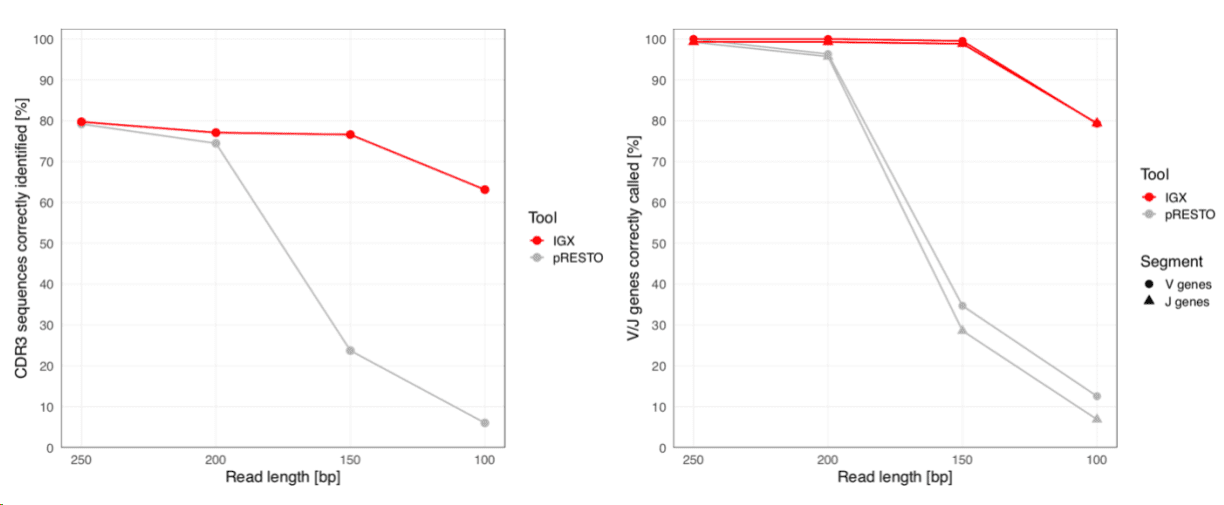
The Dutch bioinformatics software engineering company ENPICOM announced that they have finalized development and released an expanded version of their ImmunoGenomiX (IGX) platform to support discovery and development of novel immunotherapies, patient stratification for, and treatment monitoring of immunotherapies. IGX now also accepts B cell receptor (BCR) in addition to T cell receptor (TCR) sequencing data. Head-to-head benchmarking studies versus world’s most popular tool, pRESTO, show superiority on several levels.
The improvements in high-throughput sequencing (HTS) technology provide unprecedented opportunities to explore the enormous diversity of the immune repertoire by deep sequencing T cell receptors and B cell receptors. However, an efficient, integrated, easy-to-use and accurate analytical tool required to process the huge amounts of immunosequencing data has so far been lacking.
With the IGX platform, ENPICOM is on a mission to provide the immunotherapy community with a best-in-class solution to analyze T cell and B cell receptor (TCR/BCR) immunosequencing data. The base module of the IGX platform to perform T cell receptor repertoire analysis, IGX Explore, was launched in August this year. The current functional expansion of IGX Explore adds support for the identification and quantification of B cell receptors (BCRs) from HTS data. Dr. Nicola Bonzanni, ENPICOM’s Chief Scientific Officer, commented: “As BCR analysis harbors additional complexities, such as immunoglobulin (Ig) (i.e. antibody) gene somatic hypermutations, the development of a state-of-the-art solution for Ig/BCR sequence analysis offered more extensive challenges for our bioinformatics and software engineering teams. It is with great pleasure that we announce the timely release of the next version of IGX Explore and that our benchmarking studies showed even better performance than expected.”
Dr. Bonzanni continues: “We benchmarked the performance of IGX Explore for BCRs using both synthetic and experimental datasets. IGX Explore shows superior performance for critical metrics such as correctly identified CDR3 sequences and V/J gene identification. Specifically, we compared IGX Explore with pRESTO (Vander Heiden, et al. 2014), the world’s most popular BCR sequencing analysis tool. On synthetic data, we show that IGX Explore achieves consistent and highly precise performance across all commonly used read lengths, and outperforms pRESTO at short reads lengths in particular, as visualized in the graphs below.
Furthermore, using an independently published experimental dataset (Meng W, et al. 2017), we showed that IGX Explore is able to recapitulate the reference immune repertoire composition with high accuracy. Finally, IGX Explore outperforms pRESTO with regards to speed and scalability”.
As announced before, the ImmunoGenomiX (IGX) platform will be modularly expanded to become a comprehensive end-to-end immunosequencing data analysis platform designed to analyze, monitor, and compare immune repertoires in the context of immunotherapy development and at all stages of treatment and disease over time. Starting from high-throughput sequencing data, it will deliver an easy-to-read report appropriate for the specific application, be it research, diagnosis, patient stratification, or treatment monitoring. The IGX platform will allow customers to select their own sample preparation protocols and the HTS technology of choice. It requires no programming skills as the interface is intuitive and flexible.
The complete base module, IGX Explore, is now available and can perform clonality analysis of both TCR and BCR repertoires starting from raw sequencing data, report back the number of individual TCR/BCR clones and interactively visualize them in a user-friendly way. With IGX Explore, immunotherapy companies can boost their target discovery, research and drug development processes. Tailored software extensions to answer specific research or clinical questions can be custom-built in collaboration with ENPICOM’s team of immunologists and bioinformaticians.
Using a recently published and independent benchmark, ENPICOM showed in August that IGX Explore offered superior accuracy on TCRs and the current benchmark studies complement this picture for BCRs. More information about these benchmark studies can be found at the company’s website and will be published in a white paper shortly.
https://www.hollandbio.nl/wp-content/uploads/2023/08/HollandBIO_logo.svg00hollandbiohttps://www.hollandbio.nl/wp-content/uploads/2023/08/HollandBIO_logo.svghollandbio2018-12-18 22:26:092018-12-18 22:29:05Enpicom sets a new standard for B cell receptor repertoire analysis← #nieuws
Staten Biotechnology and Novo Nordisk announced that they have entered into a collaboration and exclusive option agreement to develop novel therapeutics for the treatment of hypertriglyceridaemia.
Under the collaboration agreement, Novo Nordisk will provide research and development (R&D) funding and support for Staten to develop its lead asset STT-5058 for treatment of dyslipidaemia.
“Novo Nordisk is joining forces with Staten Biotechnology at an exciting time for us, with the company’s lead compound moving towards its first clinical trial, aiming to address the residual cardiovascular risk in patients with hypertriglyceridaemia,” said Dr Hilde Steineger, CEO of Staten Biotechnology. “This partnership provides the company not only with a knowledgeable development partner but also with a funding structure that allows founders, management and the founding investors to accelerate the development of company”.
“Our partnership with Staten Biotechnology is a key step in executing our strategic priority to expand into cardiovascular diseases. Hypertriglyceridemia is a serious risk factor for cardiovascular disease, in particular often present in people with diabetes and obesity. Staten Biotechnology has developed STT-5058, a new promising concept validated by human genetics, for the treatment of hypertriglyceridemia. Combining Staten’s know-how on STT-5058, the scientific excellence of the company’s executive team and founders, with Novo Nordisk experience in drug development and commercialization, the project holds potential to make a real difference for people suffering from cardiovascular disease,” said Marcus Schindler, Senior Vice President, Global Drug Discovery in Novo Nordisk.
Under the exclusive option agreement, Novo Nordisk has the right to acquire Staten Biotechnology and gain worldwide rights to STT-5058. Staten Biotechnology and its shareholders will potentially receive signing and exercise fees, R&D funding, and milestone payments of up to 430 million euros.
https://www.hollandbio.nl/wp-content/uploads/2023/08/HollandBIO_logo.svg00hollandbiohttps://www.hollandbio.nl/wp-content/uploads/2023/08/HollandBIO_logo.svghollandbio2018-12-18 22:12:022018-12-18 22:12:31Staten Biotechnology and Novo Nordisk collaboration on novel treatment for dyslipidaemia← #nieuws
Waar gentherapie in één behandeling genoeg heeft om een patiënt te genezen, krijgt de revolutionaire biotech ontwikkeling maar liefst driemaal het podium in het Financieele Dagblad. En niet zonder reden: het Nederlandse zorgsysteem is nog lang niet klaar om de potentie van de technologieën benutten. Van overheid tot bedrijfsleven, van ziekenhuis tot Zorginstituut en van patiënt tot verzekeraar: als het aan HollandBIO ligt, slaan we in 2019 de handen ineen om ervoor te zorgen dat Nederland dé internationale koploper wordt in de ontwikkeling, toepassing én financiering van gen- en celtherapie.
https://www.hollandbio.nl/wp-content/uploads/2023/08/HollandBIO_logo.svg00hollandbiohttps://www.hollandbio.nl/wp-content/uploads/2023/08/HollandBIO_logo.svghollandbio2018-12-18 22:03:342018-12-18 22:58:51HollandBIO Leestip: 3x gentherapie in het FD← #nieuws
ProQR, a company dedicated to changing lives through the creation of transformative RNA medicines for the treatment of severe genetic rare diseases, announced the publication of a peer-reviewed manuscript describing the previously announced interim results of a clinical trial of QR-110 for the treatment of Leber’s congenital amaurosis 10 (LCA10) in the journal Nature Medicine.
“It was enormously gratifying to see robust improvements in visual acuity and significant augmentations in the patient’s ability to detect lights, and impressive to observe these effects within the first three months following a single injection,” said Professor Artur V. Cideciyan, Ph.D., who was one of the co-investigators at the Scheie Eye Institute of the University of Pennsylvania. “LCA10 is a severe form of childhood blindness and this is a major step forward in the treatment of these previously incurable conditions,” said Professor Samuel G. Jacobson, M.D., Ph.D, who is the ophthalmologist caring for four of the patients enrolled in the study and is also a co-investigator at the Scheie Eye Institute.
Published results detail a planned interim analysis of the ongoing PQ-110-001 first-in-human clinical study, evaluating QR-110 in patients with LCA10. The publication focused on a landmark analysis of eight subjects who reached three months of single dose treatment experience. Results demonstrate a substantive overall improvement in best corrected visual acuity (BCVA) with a mean improvement of -0.67 LogMAR (SEM 0.32) in the treated eye versus 0.02 LogMAR (SEM 0.05) in the contralateral (control) eye (p=0.011). The majority of patients showed an increase of at least -0.3 LogMAR in the treated eye, which is generally considered clinically meaningful, and equivalent to 15 letters, or three lines of improvement for individuals able to read a standard eye chart. Visual acuity improvements were also associated with concordant improvements in full-field stimulus thresholds to both blue and red light, improved mobility course navigation and ocular instability measurement.
LCA10 is a severe inherited retinal dystrophy associated with mutations in the CEP290 gene. QR-110 is an RNA-based drug candidate that has the potential to restore sight or slow down the process of vision loss in patients with LCA10 by correcting the most common mutation causing LCA10, p.Cys998X.
The ongoing Phase 1/2 PQ-110-001 study of QR-110 will be completed and in parallel a Phase 2/3 “ILLUMINATE” study is expected to be initiated in the first half of 2019.
https://www.hollandbio.nl/wp-content/uploads/2023/08/HollandBIO_logo.svg00hollandbiohttps://www.hollandbio.nl/wp-content/uploads/2023/08/HollandBIO_logo.svghollandbio2018-12-17 17:31:162018-12-18 17:34:20ProQR’s QR-110 Data for Leber’s Congenital Amaurosis 10 published in Nature← #nieuws
Mymetics, a pioneer and leader in the research and development of virosome-based vaccines against life threatening and life disabling diseases, announced that the pre-clinical proof-of-concept study for allergies, with their partner Anergis, has met the success criteria.
The mice proof-of-concept immunogenicity study evaluated the effects of the Bet v 1 COPs (Anergis’ proprietary birch pollen allergy peptides) using the five subcutaneous injection schedule used in former AllerT clinical trials. The development of AllerT (Bet v 1 COPs plus aluminum hydroxide) was discontinued by Anergis in 2017 following completion of a Phase 2 clinical trial showing evidence of sensitization to the peptides and a 7% reduction in seasonal allergy symptoms vs placebo (p=0.0047).
In the mice study, AllerT was compared to Bet v 1 COPs linked to Mymetics’ virosomes (the “Bet v 1 COP-virosomes”). Anergis reported that the administration of AllerT led to the development of Bet v 1 specific IgEs (p<0.001) associated with a more pronounced TH2 than TH1 response. In contrast, in the mice receiving the Bet v 1 COP-virosomes, no development of Bet v 1 specific IgEs were observed (p<0.001 vs AllerT). With the same dose of Bet v 1 COPs, there was a strong boost of immunogenicity with a TH1 antibody response, which was a hundred times greater than with aluminum hydroxide (p<0.001). The Bet v 1 COP-virosomes were well tolerated.
This study is part of the research collaboration agreement between Anergis and Mymetics which was signed in April 2018. The success criteria were met and Anergis has now a time limited option to enter into an exclusive license agreement with Mymetics for the use of virosomes in the field of allergies.
Ronald Kempers, CEO of Mymetics, stated: “The results from Anergis are very encouraging and show that our virosomes can have a broad application in vaccines, not only for prevention of infectious diseases but also in the field of immunotherapy for allergies.”
Nog voor de kerst adviseert de Gezondheidsraad (GR) over vaccinatie tegen meningokokken van het subtype B. Want naast de vaccinatie tegen subtype A, C, W en Y, bestaat er gelukkig inmiddels ook een vaccin tegen deze variant van de ernstige meningokokkenziekte. HollandBIO zet actief in op een pro-actief beleid, waarin optimale benutting van vaccins centraal staat. Een passende toegangsroute voor en heldere communicatie over elk vaccin zijn hiervoor essentieel. We wachten het advies van de GR dan ook vol spanning af.
https://www.hollandbio.nl/wp-content/uploads/2023/08/HollandBIO_logo.svg00hollandbiohttps://www.hollandbio.nl/wp-content/uploads/2023/08/HollandBIO_logo.svghollandbio2018-12-11 12:23:532023-09-27 16:32:20Advies Gezondheidsraad Meningokokken B voor kerst verwacht← #nieuws
Het Zorginstituut nodigt geneesmiddelenfabrikanten uit om bij te dragen aan de halfjaarlijkse update van de Horizonscan Geneesmiddelen. Deze scan brengt patiënten, behandelaars, ziekenhuizen, zorgverzekeraars en overheidsorganen vroegtijdig op de hoogte van ontwikkelingen op het gebied van geneesmiddelen. Verwacht je de aankomende twee jaar geneesmiddelen op de markt te brengen? Of uitbreidingen van bestaande indicaties? Dan is deze oproep van het Zorginstituut relevant voor jou.
Met deze uitvraag verzamelt het Zorginstituut gegevens voor de scan die in juni 2019 live gaat. De deadline voor aanlevering is 11 januari 2019. Producten verschijnen overigens sowieso op de scan, ongeacht of de fabrikant informatie aanlevert. Het Zorginstituut gebruikt hiervoor informatie van “(Horizon)scanners” en werkgroepen van experts. Door zelf informatie aan te leveren, draag je als bedrijf bij aan de volledigheid en accuraatheid van de scan. HollandBIO juicht deze mogelijkheid dan ook toe.
Glycostem and ENPICOM receive MIT Zuid subsidy to support their R&D partnership project of over half a million euro.
Two innovative Dutch SME’s active in Life Sciences, Glycostem Therapeutics BV and ENPICOM BV, announced that their joint MIT Zuid R&D partnership subsidy has been granted. The aim of the collaboration is to develop technology to predict the outcome of an NK-cell-based immunotherapy treatment in patients with incurable locally advanced or metastatic solid tumors, for which there is no standard therapy.
Background problem
The predictability of outcomes of universal NK-cell therapy (oNKord®) and immune suppressive effects are needed to select the best approach in a new immunotherapy against cancer.
Project goals
The primary goal is predicting the outcome of an NK-cell-based immunotherapy treatment in patients with incurable locally advanced or metastatic solid tumors, for which there is no standard therapy.
The integrated T-cell receptor and NK-cell receptor repertoire analysis developed in this project enables the development of a unique data-driven combination therapy that provides:
A new immune suppression regimen in combination with allogeneic NK-cell therapy for the treatment of multiple cancer types
An integrated model based on machine learning to predict smart treatment of immune suppression and the outcome of subsequent NK-cell therapy.
Approach & deliverables
A smart machine learning driven approach is needed. Jan Spanholtz, PhD, Glycostem Therapeutics BV’s CSO, commented: “That is why ENPICOM BV, a promising start-up with leading technology for analysis and visualisation of immunogenomic data, and Glycostem have joined forces. This R&D collaboration enables predictive modelling for smart immune suppression as preconditioning to allow allogeneic NKcell infusion as cancer treatment. Glycostem adds specific immunotherapy knowledge to the project. ENPICOM introduces leading knowledge and experience in bioinformatics and software engineering.
Jos Lunenberg, CEO of ENPICOM, added: “We are extremely pleased with this R&D partnership, as it enables us to broaden the scope of immunotherapies that we can guide with our technology from T and B cell-based to NK-cell-based therapies. Glycostem, a pioneer and expert in this field, is for us the ideal partner to adapt our technology to also support NK-cell receptor repertoire analysis”.
https://www.hollandbio.nl/wp-content/uploads/2023/08/HollandBIO_logo.svg00hollandbiohttps://www.hollandbio.nl/wp-content/uploads/2023/08/HollandBIO_logo.svghollandbio2018-12-06 23:50:492018-12-11 23:58:50TOWARDS A PREDICTABLE COMBINATION THERAPY FOR MULTIPLE CANCER TYPES