← #nieuws

Quarantaine of verzoening?

, ,

Het moet even slikken zijn voor GroenLinks: het lot van de wereld ligt in handen van hun favoriete boeman. GroenLinks vangt al jarenlang bot in haar windmolengevecht tegen de “macht van de farmaceut”. En nu zijn we voor gezondheid, sociaal contact, zelfs voor een fysieke meetup of partijcongres totaal afhankelijk van de farmaceutische industrie. Een crisis is een kans, moeten partijprominenten Klaver en Eickhout gedacht hebben toen ze hun anti-farma retoriek weer eens recycleden in een NRC opiniestuk. Ditmaal door deze met veel kunst- en (v)liegwerk te koppelen aan de uitbraak van het coronavirus.

Het coronavirus stelt de wereld voor een uitdaging die zijn weerga niet kent. We hebben nieuwe diagnostica nodig, geneesmiddelen, vaccins, medische hulpmiddelen en apparatuur. Liever vandaag dan morgen, genoeg en toegankelijk voor miljarden mensen. Onze hoop is gevestigd op biotech bedrijven, farmaceuten en medtech bedrijven. Ze kunnen wereldwijd op steun rekenen van overheden, kennisinstellingen, WHO, de Gates Foundation, noem maar op. Binnen een mum van tijd hebben bedrijven wereldwijd al talloze potentiële vaccins, geneesmiddelen en tests in ontwikkeling. En daarmee nemen ze ongekend grote investeringsrisico’s, want veel ontwikkelingen zullen mislukken en de investeringen verdampen. Gelukkig zijn er partijen zo gek om dit risico te nemen. Bedrijven starten bijvoorbeeld grootschalige productie op voordat er ook maar enige zekerheid is of het product ooit de eindstreep haalt . Alles om maar zo snel mogelijk, zo veel mogelijk levens te redden en om mensen overal ter wereld uit dit ellendige isolement te verlossen.

Tot nu toe zijn alleen bedrijven succesvol in het ontwikkelen van innovatieve, nieuwe geneesmiddelen en vaccins. Want vergeet niet: het staat iedereen vrij om medische innovaties te ontdekken, ontwikkelen en te leveren. Er is geen wet die zegt dat alleen bedrijven dit mogen. Waar deze tijd om vereende krachten, samenwerking en misschien zelfs verzoening vraagt, polariseert GroenLinks liever. Het opiniestuk bevat geen enkele oplossing, en heeft enkel ten doel om de sector die ons uit de penarie kan helpen, een stok in de wielen te gooien. Dat getuigt van onkunde en ongekend opportunisme. 

Klaarblijkelijk slijten Klaver en Eickhout hun leven liever in quarantaine, dan met hulp van de farmaceutische industrie in gezondheid en sociale vrijheid.

Zo. En dan gaan we nu weer werken aan oplossingen.

Meer lezen
https://www.nrc.nl/nieuws/2020/05/08/we-moeten-niet-langer-afhankelijk-zijn-van-goodwill-van-farmaceuten-a3999118

← #nieuws

Pfizer schaalt coronavaccin productie alvast op

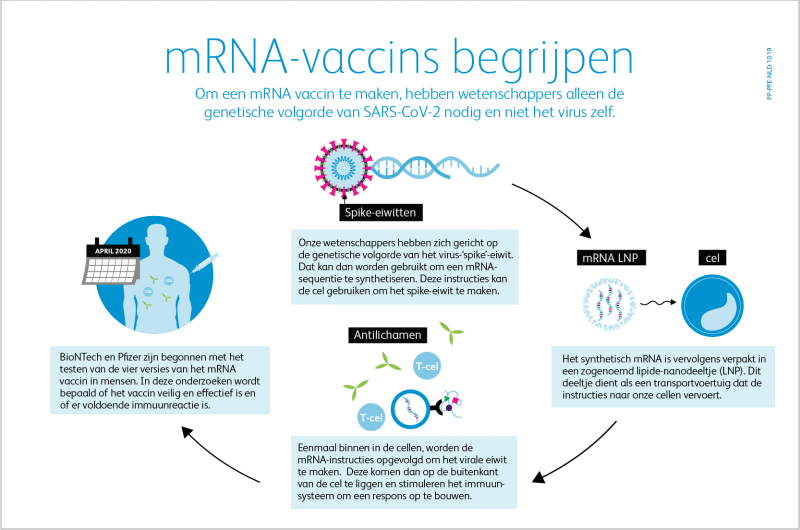
Inmiddels zijn, na de eerste proefpersonen in Duitsland, ook de eerste Amerikaanse proefpersonen geïnjecteerd met een dosis van de kandidaat-vaccins uit het BNT162 vaccinprogramma dat Pfizer en BioNtech ontwikkelen tegen het coronavirus. Om geen tijd te verliezen schalen de bedrijven hun productie nu al op. Als het onderzoek een goedgekeurd mRNA-vaccin oplevert, kunnen nog dit jaar miljoenen vaccins worden geproduceerd voor mensen die het meest kwetsbaar zijn voor het coronavirus COVID-19.

Alvast opschalen productie voor vaccins | Pfizer Nederland

Vorige week werden al twaalf Duitse proefpersonen ingeënt met een van de kandidaat-vaccins die onderdeel uitmaken van het BNT162-vaccinprogramma. In het eerste stadium van het BNT162-onderzoek worden in totaal 200 gezonde proefpersonen van tussen de 18 en 55 jaar oud gevaccineerd met vier verschillende mRNA-vaccins, in verschillende doseringen. Tijdens de klinische onderzoeksfase produceert BioNTech het vaccin in haar GMP-gecertificeerde fabrieken in Europa
 

Optimale dosering

Het doel van deze eerste onderzoeksfase is om te bepalen welk vaccin het lichaam het beste activeert om antilichamen tegen het coronavirus te maken. Ook wordt beoordeeld wat de optimale dosering van het vaccin is en of het vaccin veilig is. Als de onderzoekers dat weten, wordt ook een groep van 160 proefpersonen van tussen de 65 en 85 jaar gevaccineerd.

De Amerikaanse proefpersonen worden aangeleverd door vier grote universiteitsziekenhuizen. Dat zijn de NYU Grossman School of Medicine en de University of Maryland School of Medicine en binnenkort ook de University of Rochester Medical Center/Rochester Regional Health and Cincinnati Children’s Hospital Medical Center.
 

Opschalen van productiefaciliteiten

Ondertussen zijn Pfizer en BioNTech bezig met het opschalen van hun productiefaciliteiten om een goedgekeurd vaccin wereldwijd te kunnen leveren. Het doel is om in de loop van 2020 miljoenen doses vaccin te produceren voor mensen die het meest kwetsbaar zijn voor het coronavirus. Het aantal doses moet vervolgens oplopen tot honderden miljoenen in 2021.

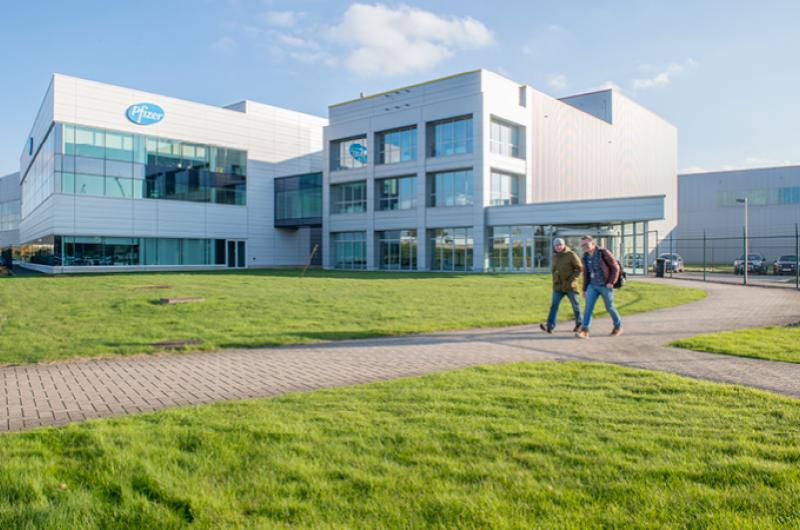
De vaccinproductiefaciliteiten van Pfizer in het Belgische Puurs en drie Amerikaanse fabrieken in Massachusetts, Michigan en Missouri zullen als eerste het COVID-19 vaccin gaan maken. Indien nodig zal Pfizer nog meer locaties beschikbaar maken in haar wereldwijde netwerk voor de productie van een goedgekeurd COVID-19 vaccin.

“We zijn ontzettend trots dat Pfizer Puurs een belangrijke rol kan spelen in de wereldwijde productie van een potentieel COVID-19 vaccin als antwoord op deze pandemie. Dit is een erkenning voor het wereldniveau in Puurs, en voor de kennis en ervaring van onze bijna 3000 werknemers,” zegt Site Lead Pfizer Puurs, Luc Van Steenwinkel.

BioNTech breidt de productiecapaciteit van haar al bestaande mRNA-fabrieken in Mainz en Idar-Oberstein verder uit, zodat een wereldwijde levering van het vaccin mogelijk wordt. BioNTech werkt in China samen met Fosun Pharma en wil het vaccin ook daar gaan testen en op de markt brengen.

‘We zetten onze beste middelen in de strijd tegen het coronavirus’

’’Met ons unieke en sterke klinische onderzoeksprogramma dat nu ook in Amerika start, hopen we in samenwerking met BioNTech en de regelgevende autoriteiten snel een veilig en effectief vaccin te kunnen bieden aan mensen die dat het hardste nodig hebben,’’ zegt Albert Bourla, CEO en voorzitter van de raad van bestuur van Pfizer. ’’In slechts vier maanden tijd is het ons gelukt om van preklinisch onderzoek de stap te maken naar onderzoek bij proefpersonen. Dat is een buitengewone prestatie; in de strijd tegen het coronavirus COVID-19 zetten we onze beste middelen in, van de voorzieningen in het laboratorium tot aan het productieproces.’’

Alvast opschalen productie voor vaccins | Pfizer Nederland

’’Het is bemoedigend dat we meer dan tien jaar ervaring met het ontwikkelen van het mRNA-platform kunnen gebruiken om in een hele korte periode een wereldwijd onderzoeksprogramma op te zetten voor de kandidaat-vaccins die we ontwikkelen,’’ zegt Ugur Sahin, CEO en medeoprichter van BioNTech. ’’We zijn optimistisch dat het testen van vier verschillende kandidaat-vaccins bij proefpersonen ertoe leidt dat we ontdekken wat de veiligste, meest effectieve vaccinatieopties tegen COVID-19 zijn.’’

Bron: Pfizer (persbericht)

← #nieuws

Kiadis Pharma receives FDA approval for NK cell therapy Phase 2 trial

,

Kiadis Pharma has received approval from the U.S. Food and Drug Administration (FDA) to start its NK-REALM phase 2 clinical trial, which the Company submitted through an investigational new drug (IND) application in April 2020. Kiadis is developing K-NK002 as an adjunctive therapy to the haploidentical HSCT standard of care with the goal of reducing relapse rates.

Kiadis’ Phase 2 study, called NK-REALM (haploidentical NK-cells to prevent post-transplant RElapse in AML and MDS), will evaluate the use of K-NK002 as an adjunctive therapy for blood cancer patients undergoing a haploidentical HSCT with the current standard of care, the post-transplant cyclophosphamide (PTCy) protocol. The study, which will be conducted with the NIH-supported Blood and Marrow Transplant Clinical Trials Network (BMT CTN), funded by the National Heart, Lung and Blood Institute and the National Cancer Institute, both part of the National Institutes of Health (NIH), will enroll 63 patients at leading transplant centers in the U.S. The first 6 patients in the NK-REALM study will be evaluated as a safety lead-in. The study is designed to confirm earlier proof-of-concept data in 24 patients, which showed that adjunctive treatment with K-NK002 has the potential to substantially improve outcomes for patients in need of a HSCT.

The Company’s phase 2 study will evaluate K-NK002 produced using Kiadis’ proprietary PM21 technology platform that enables high dose, low cost, scalable and industrial production of NK-cell therapy without the risk of residual tumor cells in the final product. This is the first human trial using drug produced with Kiadis’ PM21 technology. Kiadis is able to proceed directly with a phase 2 trial based on bridging from K-NK cells produced with FC21 used in earlier clinical studies to K-NK cells now produced with PM21. 

Arthur Lahr, CEO of Kiadis Pharma, commented, “The rapid approval of the IND that allows us to initiate this phase 2 clinical trial is an important step forward for Kiadis in bringing K-NK cell therapy to patients in need. This study is the first with K-NK cells produced with our PM21 particle production platform. Our ability to proceed directly with a Phase 2 leverages existing clinical data and further validates similarity between K-NK cells produced with FC21 and PM21. We will now work with BMT CTN to start the study and expect to enroll the first patients in the safety lead in this year.”

Kiadis Pharma’s K-NK-Cell Therapies
Kiadis Pharma’s K-NK platform is designed to deliver potent NK cells to help patients, without the need for genetic engineering. Kiadis Pharma’s programs consist of off-the-shelf and haploidentical donor NK-cell therapy products for the treatment of liquid and solid tumors as adjunctive and stand-alone therapies. 

The Company’s PM21 particle technology enables improved ex vivo expansion and activation of cytotoxic NK cells supporting multiple high-dose infusions. Kiadis Pharma’s proprietary off-the-shelf NK-cell platform is based on NK cells from unique universal donors and can make NK-cell therapy product rapidly and economically available for a broad patient population across a wide range of indications. Kiadis Pharma is developing K-NK002 as an adjunctive immunotherapeutic on top of HSCT, and K-NK003 for the treatment of relapse/refractory acute myeloid leukemia. In addition, Kiadis Pharma has pre-clinical programs evaluating NK-cell therapy for the treatment of solid tumors.

Source: Kiadis Pharma (press release)

← #nieuws

InteRNA Technologies Receives Regulatory Approval for Initiation of Phase I Clinical Trial of INT-1B3

InteRNA Technologies announced today regulatory approvals in the Netherlands and Belgium for the initiation of the first-in-human (Phase I) clinical trial testing its lead microRNA candidate, INT-1B3, in patients with advanced solid tumors. INT1B3 is a lipid nanoparticle (LNP) formulated, chemically modified miR-193a-3p mimic that can be delivered by systemic administration to cancer cells. Due to the ongoing COVID-19 pandemic, clinical trial initiation has been delayed and is now anticipated to start during H2 2020. The Company will provide an update once the trial has officially launched.

The study is a multicentric, open-label and multiple ascending dose clinical trial that will investigate the safety, pharmacokinetics, pharmacodynamics and preliminary efficacy of INT-1B3 in patients with advanced solid tumors. The study is expected to enroll a total of up to 80 patients at 12 clinical centers in the United States and Europe. The first part of the trial is a Phase Ia dose escalation study, conducted in the Netherlands and Belgium, which will enroll approximately 30 patients with advanced solid tumors. These patients will receive INT-1B3 via infusions twice weekly in 21-day cycles. Subsequently, approximately 50 patients with either hepatocellular carcinoma or triple negative breast cancer will be enrolled in the Phase Ib dose expansion part of the trial. Initial data readout from the Phase Ia study is expected in the end of 2021.

“The multi-targeted nature of microRNAs represents a novel approach to treating a broad range of cancer indications by effectively targeting several biochemical pathways simultaneously,” said Dr. Roel Schaapveld, CEO of InteRNA Technologies. “Driven by the promise of microRNAs as a treatment modality in cancer, our understanding of the underlying mechanism of action of INT1B3 and the identification of a delivery vehicle for optimized performance, our primary focus has been on preparing our lead candidate for first-in-human clinical trials. As such, we are truly excited to bring INT-1B3 into the clinic and to gain deeper insights on how it reacts against solid tumors.”

“INT-1B3 is a promising and novel anti-cancer approach with anti-tumor potential involving direct effects on tumor cells and modulation of the immunosuppressive tumor microenvironment leading to immune system activation,” added Prof. Dr. Emile Voest, Chairman of InteRNA’s Scientific Advisory Board and Medical Director of the Netherlands Cancer Institute in Amsterdam. “The safety profile and significant anti-tumor efficacy demonstrated in preclinical studies provide a strong basis for first-in-human studies with INT-1B3.”

Source: InteRNA (press release)

← #nieuws

Productie in Nederland van miljoenen medische mond- en neusmaskers voor zorgmedewerkers gestart

,

Het Nederlandse consortium van AFPRO Filters, Koninklijke Auping en Koninklijke DSM is gestart met de grootschalige productie op eigen bodem van FFP2 medische mond- en neusmaskers, die zorgmedewerkers beschermen tegen het corona-virus. Op verzoek van Minister van Rijn van Medische Zorg en Sport worden in de komende maanden miljoenen mondkapjes geproduceerd. Met deze grootschalige nationale productie wordt in recordtijd ongeveer 25% van de acute behoefte aan medische mondmaskers voor de zorg in Nederland voorzien.

Productie-in-nederland-rte

Na een spontane afspraak op 10 april tussen de CEOs van AFPRO, Auping en DSM is met man en macht gewerkt om grootschalige productie in Nederland op te zetten. Het consortium gaat voorzien in de grote behoefte aan gecertificeerde mond- en neusmaskers om zorgmedewerkers die in aanraking komen met coronapatiënten te beschermen. Inmiddels worden in Alkmaar en Deventer volwaardige productielijnen voor FFP2 mond- en neusmaskers opgetuigd voor de volumeproductie van 1 miljoen mond- en neusmaskers per week. De eerste duizenden mondmaskers, met de hand en volgens de overheidsrichtlijnen gemaakt door Auping, worden deze week geleverd aan het Landelijk Consortium Hulpmiddelen (LCH) dat de distributie aan zorginstellingen organiseert. De bedrijven leveren de mond- en neusmaskers tegen kostprijs aan de overheid en geven volledig en transparant inzicht in de gemaakte kosten.

Krachten bundelen

Bij de grootschalige productie van de gecertifieerde mond- en neuskapjes zijn de expertises van de drie bedrijven gebundeld: de kennis van luchtfiltersystemen van AFPRO Filters, de productiecapaciteit en ervaring van Auping met het confectioneren van stoffen en materialen in verschillende lagen en de specialistische materialenkennis, de algehele coördinatie en het wereldwijde netwerk van DSM. Zo is een unieke samenwerking ontstaan die de Nederlandse overheid helpt met de snelle opstart van de productie van FFP2 maskers op Nederlandse bodem. Met deze publiek-private samenwerking slaan de Nederlandse overheid en het Nederlandse bedrijfsleven de handen ineen om mensen in de frontlinie te beschermen en de coronacrisis aan te pakken.

Minister Martin van Rijn (Medische Zorg): “Mooi dat met de samenwerking van DSM, Auping en AFPRO de eigen productie aan FFP2 mondmaskers in Nederland is gestart. Samen met de luchtbrug van China naar Nederland en hergebruik komt er zo een structurele stroom van miljoenen mondmaskers per week op gang. Geweldig nieuws voor iedereen die zo hard werkt in de zorg”.

Minister Eric Wiebes (Economische Zaken en Klimaat): “De enorme bereidheid van het bedrijfsleven om een bijdrage te leveren aan de bestrijding van het coronavirus is een belangrijk lichtpunt in deze uitzonderlijke tijd. Dankzij een gezamenlijke inspanning van het consortium en de overheid kan de productie van hoogwaardige mondmaskers ondanks de schaarste aan materialen en machines nu gestart worden.”

Bron: DSM (persbericht)

← #nieuws

CBG presenteert Strategisch Business Plan 2020-2024

, ,

HollandBIO juicht de ambitie van het College ter Beoordeling van Geneesmiddelen (CBG) om toekomstbestendig te opereren toe. De wereld van medicijnen verandert snel en nieuwe ontwikkelingen op het gebied van onder andere personalised medicine, gentherapie, biomarkers en real world data, hebben invloed op het systeem van beoordelen en reguleren van medicijnen en vragen om veranderingen in de dagelijkse praktijk.

Het College ter Beoordeling van Geneesmiddelen (CBG) heeft voor de komende vier jaar de strategische koers bepaald in het Strategisch Business Plan 2020 – 2024 ‘Toekomstbestendig en praktijkgericht reguleren’. Hierin staan de thema’s en de ambities waar het CBG zich de komende jaren op zal richten. Nog meer en beter samenwerken op allerlei vlakken en niveaus, van patiëntenorganisaties tot ontwikkelaars van medicijnen en wetenschappers is het devies. HollandBIO werkt nu én in de toekomst graag samen met het CBG aan initiatieven, zoals bijvoorbeeld de pilot parallelle procedures, die eraan bijdragen dat nieuwe medicijnen sneller en beter beschikbaar zijn voor de patiënt.

Het Strategisch Business Plan 2020-2024 “Toekomstbestendig en praktijkgericht reguleren” is in te zien en te downloaden op: https://www.cbg-meb.nl/onderwerpen/over-cbg-ons-verhaal/over-cbg-strategisch-business-plan

← #nieuws

Coronavaccin: quarantainekiller of commerciële catastrofe?

, ,

Je zou het ten tijde van de coronacrisis bijna vergeten, maar de ontwikkeling van een vaccin vormt een enorm commercieel risico voor bedrijven. In een lezenswaardig artikel in het Financieel Dagblad komt het werk van CEPI, de Coalition for Epidemic Preparedness Innovations, aan bod die dat risico wil ondervangen. Hoog tijd om eens stil te staan bij de enorme inzet waarmee biofarma speurt naar een quarantainekiller.

Het FD legt een confronterende waarheid bloot: “De ontwikkeling van een vaccin is voor bedrijven commercieel een enorm risico. De investeringen wegen zelden op tegen de omzetpotentie van een vaccin. Het risico bestaat zelfs dat alle investeringen voor niets zijn, aangezien sommige virussen na verloop van tijd uitdoven en geen vaccin meer vereisen. Bovendien sneuvelen veel potentiële vaccins, omdat ze niet effectief blijken of te veel bijwerkingen kennen.”

En toch, ondanks alle uitdagingen en bezwaren, springt het bedrijfsleven in deze unieke crisissituatie zonder greintje twijfel met haar kennis en kunde op de bres:

  • Zo kondigt AstraZeneca aan de ontwikkeling, wereldwijde productie en distributie van een potentiële vaccinkandidaat van de Universiteit van Oxford te organiseren.
  • Of neem Pfizer en BioNTech, die in een recordtijd een klinische trial naar een mRNA-vaccin opstarten in Duitsland. Nieuws dat HollandBIO-bestuurslid en medisch directeur bij Pfizer Marc Kaptein een waar kwartet op radio en TV opleverde (bij Goedemorgen Nederland, nogmaals bij Goedemorgen Nederland [vanaf 12.30], bij Nieuwsuur [vanaf 8.30] en bij BNR).
  • Of denk bijvoorbeeld aan GSK en Sanofi die eerder vorige maand al besloten de handen ineen te slaan om tot een vaccin te komen.
  • Janssen ontwikkelt eigenhandig een vaccin en legt tegelijk at risk een voorraadje aan.
  • Maar denk ook aan MKB’ers als bijvoorbeeld Mymetics, Prothini, Pharmacytics, Pharming en Khondrion, die met mooie plannen in de rij staan voor financiering van een hypothese of een plan dat een kandidaatvaccin -of een (herbestemd) geneesmiddel- kan opleveren.  

Welk vaccin precies de eindstreep haalt? Hoewel iedereen graag de redder in nood wil zijn, doet dat er al lang niet meer toe. Iedereen wil deze pandemie vooral zo snel mogelijk de kop indrukken. Liever een goed en veilig vaccin in de arm, dan een indrukwekkende meer dan zeventig in de lucht. In deze onzekere tijden kan HollandBIO één garantie geven: biotech draagt bij aan de oplossing!

← #nieuws

SARS-CoV-2 infects cells in a human intestinal organoid model

Researchers from the Hubrecht Institute in Utrecht, Erasmus MC University Medical Center Rotterdam, and Maastricht University in the Netherlands have found that the coronavirus SARS-CoV-2, which causes COVID-19, can infect cells of the intestine and multiply there. Using state-of-the-art cell culture models of the human intestine, the researchers have successfully propagated the virus in vitro, and monitored the response of the cells to the virus, providing a new cell culture model for the study of COVID-19. These findings could explain the observation that approximately one third of COVID-19 patients experience gastrointestinal symptoms such as diarrhea, and the fact that the virus often can be detected in stool samples. The results of this study were published in the scientific journal Science.

Patients with COVID-19 show a variety of symptoms associated with respiratory organs – such as coughing, sneezing, shortness of breath, and fever – and the disease is transmitted via tiny droplets that are spread mainly through coughing and sneezing. One third of the patients however also have gastrointestinal symptoms, such as nausea and diarrhea. In addition, the virus can be detected in human stool long after the respiratory symptoms have been resolved. This suggests that the virus can also spread via so-called “fecal-oral transmission”.

Intestinal organoids

Researchers from the Hubrecht Institute, Erasmus MC and Maastricht University set out to determine whether the SARS-CoV-2 virus can directly infect the cells of the intestine, and if so, whether it can replicate there as well. They used human intestinal organoids: tiny versions of the human intestine that can be grown in the lab. Hans Clevers (Hubrecht Institute): “These organoids contain the cells of the human intestinal lining, making them a compelling model to investigate infection by SARS-CoV-2.”

Infection of intestinal cells

When the researchers added the virus to the organoids, they were rapidly infected. The virus enters a subset of the cells in the intestinal organoids, and the number of cells that are infected increases over time. Using electron microscopy, an advanced way to visualize different components of the cell in great detail, the researchers found virus particles inside and outside the cells of the organoids. Peter Peters (Maastricht University): “Due to the lockdown, we all studied virtual slides of the infected organoids remotely from home.”

The researchers also cultured the organoids in different conditions that result in cells with higher and lower levels of the ACE2 receptor, through which SARS-CoV-2 can enter the cells. To their surprise, they found that the virus infected cells with both high and low levels of the ACE2 receptor. Ultimately, these studies may lead to new ways to block the entry of the virus into our cells.

Implications

The current study is in line with other recent studies that identified gastrointestinal symptoms in a large fraction of COVID-19 patients and virus in the stool of patients free of respiratory symptoms. Special attention may be needed for those patients with gastrointestinal symptoms. More extensive testing using not only nose and throat swabs, but also rectal swabs or stool samples may thus be needed.

In the meantime, the researchers are continuing their collaboration to learn more about COVID-19. They are studying the differences between infections in the lung and the intestine by comparing lung and intestinal organoids infected with SARS-CoV-2.

Publication

SARS-CoV-2 productively Infects Human Gut Enterocytes. Mart M. Lamers*, Joep Beumer*, Jelte van der Vaart*, Kèvin Knoops, Jens Puschhof, Tim I. Breugem, Raimond B.G. Ravelli, J. Paul van Schayck, Anna Z. Mykytyn, Hans Q. Duimel, Elly van Donselaar, Samra Riesebosch, Helma J.H. Kuijpers, Debby Schipper, Willine J. van de Wetering, Miranda de Graaf, Marion Koopmans, Edwin Cuppen, Peter J. Peters, Bart L. Haagmans† and Hans Clevers†. Science 2020. * Equal contribution, † equal contribution.

Source: HUB (press release)

← #nieuws

HALIX enters collaboration with the University of Oxford for GMP manufacturing of a COVID-19 vaccine

,

HALIX has joined a consortium of partners under the guidance of the University of Oxford, to provide GMP manufacturing services supporting the large scale production of a COVID-19 vaccine (ChAdOx1 nCoV-19), being developed by the University’s Jenner Institute. This GMP manufacturing scale-up is taking place alongside early phase clinical trials. The trials are crucial in testing whether the vaccine is proven to be effective.

The nCoV-19 vaccine is based on the Jenner Institute’s adenovirus vaccine vector (ChAdOx1) technology, which was chosen as the most suitable candidate for a SARS-CoV-2 (COVID-19) vaccine as it can generate a strong single dose immune response, and is not a replicating virus, so it cannot cause infection in the vaccinated individual.

Under the collaboration, HALIX B.V. will utilise its brand new state-of-the-art GMP facilities with capacity up to 1,000 L SUB scale, applying its viral vector bioprocessing expertise, to transfer an industrial scale drug substance process from Pall in the UK, supporting the manufacture of ChAdOx1 nCoV-19 clinical trial material. Based on this transfer, HALIX B.V. and the consortium will be in a position to manufacture at a larger scale. This is a key step in decreasing the time it would normally take to make the vaccine available for deployment and could help to halt the further spread of this pandemic.

The large-scale manufacturing project is a collaborative effort, led by Dr Sandy Douglas at the Jenner Institute. The ChAdOx1 coronavirus vaccine alliance encloses viral vector manufacturing and regulatory compliance experts from the University of Oxford’s Jenner Institute and Clinical Biomanufacturing Facility, the Vaccine Manufacturing and Innovation Centre (VMIC), Pall Biotech and Cobra Biologics.

Alex Huybens, Chief Operations Officer of HALIX, states: “We are committed to working as one team across the industry bringing our collective expertise, track record and manufacturing capabilities, to support the Jenner Institute’s rapid clinical development of this nCoV-19 vaccine candidate to combat this evolving crisis as quickly as possible.”

HALIX has an established technical and quality track record for the development and GMP manufacture of viral vectors used against infectious diseases, such as HIV, ZIKA, chikungunya and the flu. Our brand new 6,700 m2 BSL2 GMP facility, located in Leiden (the Netherlands), provides both clinical and commercial scale manufacturing capabilities in fully independent, self-contained Grade B and C cleanrooms for virus products.

The clinical trial program, led by Professor Sarah Gilbert at the Jenner Institute and Professor Andrew Pollard of the Oxford Vaccine Group, will recruit up to 510 volunteers, who will receive either the ChAdOx1 nCoV-19 vaccine or a control injection for comparison. Since March 23, 2020, The University of Oxford is recruiting individuals in the UK to take part in trialing the vaccine. For further information on the vaccine, visit: https://covid19vaccinetrial.web.ox.ac.uk/.

Source: Halix (press release)

← #nieuws

Corona-compilatie: een race tegen de klok

Diverse media bogen zich afgelopen week over de wereldwijde wedloop naar een medicijn en/of vaccin tegen het coronavirus. De hamvraag in al die artikelen is hetzelfde: hoe lang nog? Voor meer inzicht in het complexe ontwikkelproces tipt HollandBIO deze week een uitgebreid NRC-artikel over de vijf tactieken om het virus met een vaccin te bestrijden, een inzichtelijk Elsevier-artikel over struikelblokken in het vaccin- en medicijnontwikkelproces en een openhartig AD-interview met Lidia Oostvogels van Duitse vaccinontwikkelaar Curevac.