← #nieuws

Immunicum Announces Enrollment of First Patient in Phase I ALISON Study Evaluating Cancer Relapse Vaccine Candidate DCP-001 in Ovarian Cancer

Immunicum AB (publ) announced that the first patient has been enrolled in the Phase I ALISON clinical study evaluating DCP-001, the Company’s lead cancer relapse vaccine candidate, in High-Grade Serous Ovarian Cancer (HGSOC) patients following primary standard of care treatment. The ALISON study is carried out by Professor Hans Nijman and his research group in Groningen, the Netherlands, and investigates the ability of DCP-001 to trigger the immune system to control cancer cells that may have remained in the body after surgery and treatment with chemotherapy in order to prevent or reduce tumor reccurence. This is the first study using Immunicum’s cancer relapse vaccine approach to target a solid tumor indication and will evaluate the safety, feasibility and immunogenicity of DCP-001.

“The start of the Phase I ALISON study with the first patient enrolled marks an important milestone in our clinical development strategy, as ovarian cancer is a completely new indication for Immunicum and the study is the first evaluation of DCP-001 in a solid tumor indication,” commented Jeroen Rovers, Chief Medical Officer at Immunicum. “Other immunotherapies such as checkpoint inhibitors have shown relatively low responses in ovarian cancer. This study builds on our promising preclinical data showing significant reduction in tumor growth following DCP-001 administration and will further evaluate the immunogenicity of our cancer relapse vaccine candidate in patients with solid tumors for the first time.”

Hans W Nijman, MD, PhD, Principal Investigator of the ALISON study and Professor at University Medical Center in Groningen, the Netherlands, added: “Tumors tend to develop ways that allow them to evade the body’s immune response against them, hence making the tumors resistant to many therapies. Immunicum’s relapse vaccine candidate contains allogeneic dendritic cells that can boost various key elements of the immune system against multiple tumor antigens, potentially making it a vital component in the fight against tumor recurrence and clinical relapse in ovarian cancer patients.”

The Phase I ALISON study is a single-center, open-label study evaluating safety and efficacy of DCP-001 in High-Grade Serous Ovarian Cancer (HGSOC) patients. HGSOC is a unique type of epithelial cancer that is characterized by the loss of function of the tumor suppressor protein, p53, which can lead to chemotherapy resistance and disease relapse. The vaccination regimen with DCP-001 will be scheduled after standard of care treatment, which includes chemotherapy either before or after debulking surgery, and will start 6 weeks following the last cycle of chemotherapy. Patients will receive 4 bi-weekly vaccinations with 25 million cells per DCP-001 vaccination and 2 additional booster vaccinations with 10 million cells per vaccination. Patient follow-ups will be conducted for 24 months. The primary endpoint of the study is change from baseline of DCP-001 vaccine antigen-specific T cells in peripheral blood after treatment. Key secondary endpoints include safety and tolerability after repeated DCP-001 dosing as well as recurrence free survival (RFS) and overall survival (OS) during the follow-up period.

Source: Immunicum (Press release)
← #nieuws

Health~Holland Update: the Power of Prevention

If we look back over the past century at the Dutch health and welfare, we can say one thing for certain: prevention is key. In the past 150 years, life expectancy in the Netherlands has risen by about 35 years due to prevention. Schools, vaccination programmes, clean drinking water, road safety, good maternity care, environmental laws… the list goes on and on. These things are so well intertwined in our daily life, that we often don’t even realise they’re here to keep us healthy.

However, we’re not there yet. There is still work to do to improve our lifestyle and living environment and become even healthier still. Prevention is pivotal for realising our national central mission on Health and Care – five more years of healthy living and reducing socioeconomic health differences by 30% . Therefore, the first underlying mission is: By 2040, the burden of disease resulting from an unhealthy lifestyle and living environment is decreased by 30%. But what does this new, healthy environment look like? What role do citizens, knowledge institutions, companies and the government play? Read this Health~Holland update to find out! Look for a nice, sunny spot outside and become inspired.

Taking the next Step – the Power of Prevention

Source: Health~Holland

← #nieuws

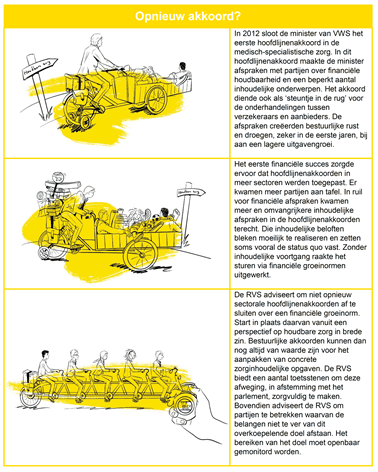
RVS fietst hem erin: rek uit hoofdlijnenakkoorden

,

“De zekerheid van kostenbeheersing is verleidelijk, maar staat op gespannen voet met noodzakelijke veranderingen in de zorg.”, zo staat te lezen in het persbericht dat de Raad voor Volksgezondheid en Samenleving (RVS) publiceert naar aanleiding van haar advies over passende inzet van bestuurlijke akkoorden in de zorg. HollandBIO is het hier roerend mee eens: de transitie naar gezondheid op maat dwingt ons de status quo ter discussie te stellen.

HollandBIO roept het al jaren: om nieuwe behandelingen sneller en beter van lab naar patiënt of praktijk te brengen, moeten we werk maken van oplossingen waarbij gezondheid, innovatie en betaalbaarheid hand in hand gaan. En als die niet binnen het huidige systeem passen, dan moet het op zijn minst bespreekbaar zijn om het systeem aan te passen. Door binnen het systeem eenzijdig op kostenbeheersing te focussen, dreigen innovatie en gezondheidswinst kind van de rekening te worden.

Door technologische innovaties zijn we steeds beter in staat om gezondheid op maat mogelijk te maken, ons langetermijnperspectief. Om deze ambitie werkelijkheid te zien worden, is het zaak dat innovatieve koplopers hun weg weten te vinden van lab naar praktijk. Hierbij gaan de kosten vaak voor de baten uit. HollandBIO kan zich dan ook helemaal vinden in de oproep van de RVS om “op korte termijn te komen tot een langetermijnperspectief op de houdbaarheid van de zorg in brede zin”. Al maken wij er dan nóg liever “op gezondheid in brede zin” van.

Samenvatting in Beeld uit advies “Opnieuw Akkoord?”, mei 2021 (RVS)

Het hele RVS rapport lees je hier: https://www.raadrvs.nl/actueel/nieuws/2021/06/21/stop-met-hoofdlijnenakkoorden-in-de-huidige-vorm

← #nieuws

Minister van Ark: genetische informatie is de toekomst van de zorg

,

HollandBIO roept het wel vaker: onze ambitie is gezondheid op maat. Door innovaties uit de biotech sector maximaal te benutten kunnen we zorgen dat iedereen de beste behandeling op het juiste moment krijgt. Dit is van grote waarde voor patiënten, zo ziet ook minister voor Medische Zorg van Ark.

Goede diagnostiek is een belangrijke voorwaarde om te zorgen dat iemand de juiste behandeling ontvangt. Minister van Ark sluit zich hierbij aan, zo blijkt uit antwoorden op Kamervragen van Joba van den Berg (CDA) over de noodzaak om Next Generation Sequencing (NGS) in te zetten voor longkanker. In de schriftelijke reactie noemt de minister de inzet van genetische informatie de toekomst van de zorg. Dat sluit perfect aan bij onze inzet op slimmer meten, waarbij wij pleiten voor de inzet van technologische innovaties -waaronder NGS- om de zorg beter te maken.

De beantwoording van deze Kamervragen maakt duidelijk dat de minister ziet wat biotech voor de patiënt kan betekenen. De ambitie is er, de technologie ook. Laten we er dan nu als de wiedeweerga voor zorgen dat we de benodigde (nieuwe) biotech innovaties sneller en beter van lab naar praktijk brengen, waar ze hard nodig zijn om patiënten van gezondheid op maat te voorzien. De rode loper moet uit!

← #nieuws

Cergentis and collaborators publish a method for accurate and automatic detection of clinically relevant translocations in tumor biopsies

Cergentis, a genomics company that develops and commercializes kits and services based on its proprietary Targeted Locus Amplification (TLA) technology, today announced the completion of a successful analytical validation study in lymphoma to show the benefits of TLA for the detection of clinically relevant translocations in tumor biopsies. The results of this study, performed in collaboration with researchers from Hubrecht Institute and lymphoma experts of 5 Dutch pathology labs (UMCU, Amsterdam UMC, UMCG, LUMC and LabPON), have now been published in Nature Communications.

The FFPE-TLC approach promises to revolutionize lymphoma diagnostics and as the technology fits a standard targeted NGS workflow and allows for detection of all clinically relevant mutations, both small and large, in a single diagnostic test. This is especially relevant for precious needle biopsies with limited material available, opening opportunities to improve diagnoses and patient treatments for many more cancer types.

With the help of the EU Horizon 2020 SME grant, awarded in 2018, and its partners, Cergentis has successfully developed the TLA technology specifically for formalin-fixed paraffin-embedded (FFPE) tumor biopsies: FFPE-TLC. FFPE-TLC technology employs the inherent DNA crosslinking and fragmentation of FFPE tissue which, combined with conventional capture enrichment and next generation sequencing (NGS), allows to detect large structural variation in the DNA of a tumor sample over much wider genomic regions than standard NGS technologies, improving robustness and sensitivity. The PLIER algorithm, developed in parallel, allows for automated detection of these structural rearrangements from FFPE-TLC NGS data, providing a major step forward in this field.

The published study shows that FFPE-TLC has clear advantages over FISH (fluorescence in situ hybridization) analysis, the most common used method for translocation detection in lymphoma diagnostics, yielding more information, showing better sensitivity and higher resolution. Prof. Daphne de Jong, hematopathologist at Amsterdam University Medical Centre and one of the collaborators:

“The FFPE-TLC approach can greatly improve lymphoma diagnostics and promises to be the hoped-for alternative for cumbersome FISH analyses.”

FFPE-TLC proves to be a robust assay which also has clear benefits over targeted NGS methods as it provides an automated analysis workflow and enables detection of translocations independent of the exact fusion sequence.

“We are very proud of the results of this technological breakthrough. In collaboration with thought leaders at Hubrecht Institute and renowned clinical institutions, we have demonstrated the value of FFPE-TLC technology for cancer diagnostics.”

Joris Schuurmans, CEO of Cergentis, stated.

“With this recognition in hand we are set out to make the technology available for use in pathology labs to help improve diagnosis of patients suffering from lymphoma and other cancer types.”

Source: Cergentis (Press release)

← #nieuws

Pilot Parallelle Procedures CBG-ZIN: en dat is zes

, ,

Nieuwe behandelingen komen sneller beschikbaar voor patiënten via de pilot ‘Parallelle Procedures CBG-ZIN’. Vorige week werd bekend dat Janssen-Cilag B.V. zich als zesde kandidaat heeft aangemeld voor de pilot. Het gaat om een aanvraag voor het geneesmiddel Ciltacabtagene Autoleucel, een CAR-T-cel-therapie voor de behandeling van multipel myeloom (ziekte van Kahler). Ciltacabtagene Autoleucel heeft voor deze indicatie een PRIME designation van het Europees Medicijnagentschap (EMA) ontvangen. Dit is het eerste intramurale geneesmiddel dat deze parallelle procedure gaat doorlopen.

In de pilot slaan CBG en ZIN de handen ineen om de tijd van lab naar patiënt te verkorten, door eerder te starten met het nationale vergoedingstraject en dit (deels) parallel te laten lopen met het Europese registratietraject. Met dit parallel registratie- en vergoedingstraject is Nederland koploper binnen Europa. Een dergelijke interactie tussen registratie- en vergoedingsautoriteiten lijkt nog nauwelijks van de grond te komen elders in de EU.

HollandBIO is erg enthousiast over de pilot, omdat deze naadloos aansluit bij het HollandBIO programma Sneller & beter van lab naar patiënt. Binnen dit programma werken wij aan oplossingen waarbij gezondheidswinst, innovatie en betaalbaarheid hand in hand gaan. Deze pilot biedt mogelijkheden om een flexibel gezondheidsecosysteem een stap dichterbij te brengen, zodat Nederland klaar is om de volle potentie van de geneesmiddelen van morgen te verzilveren.

De eerste twee geneesmiddelen van Novo Nordisk en Insmed B.V. hebben dit proces ondertussen succesvol doorlopen. De doorlooptijd van registratie en vergoeding werd gemiddeld met 3 maanden verkort. Astellas Pharma B.V. doorloopt momenteel als derde kandidaat de parallelle procedure en ook Bayer B.V., Vifor Pharma en Janssen-Cilag B.V zijn aangemeld. Deze parallelle registratie- en vergoedingsprocedure starten in de tweede helft van 2021.

Het is de intentie van het CBG en ZIN om de parallelle procedure in te bedden als een optie voor vergoedingsaanvraag. Daarvoor is het zaak om vlieguren op te bouwen. Hiervoor staan het CBG en ZIN altijd open voor nieuwe pilot kandidaten die de uitdaging aandurven, dus wie o wie wordt nummer zeven?

Meer info:

https://www.zorginstituutnederland.nl/werkagenda/parallelle-procedures-cbg-zin

https://www.cbg-meb.nl/onderwerpen/hv-pilot-parallelle-procedures-cbg-zin

← #nieuws

Prikken wat de pot schaft

Nu onze vaccinatiecampagne op stoom is en we dankzij de dalende infectiedruk voorzichtig onze maatregelen versoepelen, begint ook de reflectie en bezinning op “de Nederlandse corona-aanpak”.

In Trouw en de Volkskrant trappen huisarts Berend Jansen en oud CBG-voorzitter Bert Leufkens af met hun inzichten over de Nederlandse coronakeuzes. Voor beide heren staat centraal dat we in een situatie als deze zo snel mogelijk, zo veel mogelijk mensen -mondiaal- van een werkzaam vaccin moeten voorzien. En hoe medisch-wetenschappelijk verantwoord ook, precies aan dat doel zijn we volgens beide heren met onze keuzes voorbij gegaan. Want vooruitlopend op de kennis over de werkzaamheid en bijwerkingen, zijn twee nog altijd veilige en effectieve vaccins afgeserveerd, met grote gevolgen voor het vertrouwen van de samenleving in andere vaccins.

Reflecterend op het vaccinatiebeleid vraagt HollandBIO zich af of wetenschappelijke adviesraden en overheden in pandemische tijden niet veel meer in samenwerking zouden moeten optreden, in plaats van in elke lidstaat individueel te adviseren of beoordelen welk vaccin naar wie gaat. Zouden we niet beter af zijn als we hier op Europees -of misschien zelfs globaal- niveau afspreken over maken, daarbij vanaf dag 1 rekening houdend met de impact en toegankelijkheid van vaccins op minder bevoorrechte delen van de wereld? Prikken wat de pot schaft dus, alleen dan in optima forma.

← #nieuws

Byondis Announces Positive Topline Results of Pivotal Phase III TULIP® Study in Patients With HER2-Positive Unresectable Locally Advanced or Metastatic Breast Cancer

Byondis B.V. announced positive topline results from the Phase III TULIP® study, a multi-center, open-label, randomized clinical trial. The trial compared the efficacy and safety of the company’s antibody-drug conjugate (ADC) [vic-]trastuzumab duocarmazine (SYD985) to physician’s choice treatment in patients with pretreated HER2-positive unresectable locally advanced or metastatic breast cancer (MBC).

The Phase III TULIP study “SYD985 vs. Physician’s Choice in Participants With HER2-positive Locally Advanced or Metastatic Breast Cancer” met its primary endpoint of progression-free survival (PFS), demonstrating a statistically significant improvement over physician’s choice. PFS is defined as the time from the date of randomization to the date of first documented disease progression or death due to any cause, whichever occurred earlier. The study also demonstrated preliminary supportive overall survival (OS) results.

“There is considerable unmet medical need in patients with HER2-positive metastatic breast cancer and [vic-]trastuzumab duocarmazine represents a promising potential clinical advance,” said Byondis Chief Medical Officer Jan Schellens, M.D., Ph.D. “We are excited by the topline results of TULIP and indebted to all patients who participated in the clinical studies.”

Byondis CEO Marco Timmers, Ph.D., referred to the study’s culmination as a triumph over adversity. “A large trial involving breast cancer patients with advanced disease is difficult in the best of times, but it is especially challenging during a global pandemic. The completion of TULIP is a testament to the dedication of all involved, especially the patients, their families and participating clinical sites.”

Detailed results from TULIP will be published at scientific conferences in due course. Byondis will complete the biological license application (BLA) and intends to submit it before the end of 2021.

With this positive study outcome, Byondis is planning to explore partnerships with pharma and biopharma companies in order to commercialize SYD985 and make it available to patients in need of new treatment options.

SYD985 was granted fast track designation by the U.S. Food & Drug Administration in January 2018 based on promising data from heavily pre-treated last-line HER2-positive MBC patients participating in a two-part Phase I clinical trial (SYD985.001).

Source: Byondis (Press release)

← #nieuws

Lonza and Moderna Announce Further Collaboration For Drug Substance Manufacturing of COVID-19 Vaccine Moderna in the Netherlands

Lonza announced the expansion of its collaboration with Moderna, a biotechnology company pioneering messenger RNA (mRNA) therapeutics and vaccines. The expanded collaboration will further extend the manufacture of the drug substance for the COVID-19 Vaccine Moderna and provides for the installation of a new manufacturing line for drug substance production at Lonza’s Geleen (NL) site.

The new production line in Geleen (NL) will complement Lonza’s existing drug substance production network for COVID-19 Vaccine Moderna and deliver a crucial manufacturing step to increase overall drug substance output. As such, the new production line will contribute to the supply of up to an additional 300 million doses per year, at a 50ug dose, once operating at full capacity. 

In May 2020, Lonza and Moderna announced a ten-year strategic collaboration agreement to enable the manufacture of Moderna’s COVID-19 vaccine and additional Moderna products in the future. Since then, Lonza has installed three production lines at its Visp (CH) site and one production line in Portsmouth (US). In April 2021, Lonza and Moderna entered a new agreement to add three further production lines at its Visp (CH) site. 

The new production line in Geleen (NL) is expected to be operational by the end of 2021. Lonza will leverage its existing infrastructure in Geleen (NL) to provide fast build-out and ramp-up of operations.

Source: Lonza (Press release)

← #nieuws

Ruim baan voor biotech

,

Een mooie oproep van EuropaBio, Alliance for Regenerative Medicine en EFPIA: stel ATMP’s vrij van de wetgeving voor genetisch gemodificeerde organismen (ggo’s) en borg hun veiligheid en effectiviteit in de geneesmiddelenwetgeving van de EU, die naar verwachting in 2022 vernieuwd wordt. Een aparte milieurisicobeoordeling voor het gebruik van ggo’s is dan niet meer nodig.

Hoewel HollandBIO dit voorstel natuurlijk alleen maar toejuicht, gaan wij het liefst nog een stap verder: begin helemaal met een schone lei. Want zoals de Europese Commissie eind april zelf ook al concludeerde is de ggo-wetgeving toe aan vernieuwing. HollandBIO stelt voor alle eindproducten vanuit een productwetgeving op hun veiligheid te beoordelen, onafhankelijk van hoe ze gemaakt zijn, voor alle mogelijke toepassingen. Zo zorgen we dat biotech op alle fronten het leven beter kan maken: gezondheid, voeding en duurzaamheid.